Afterword
Afterword
I don’t really know if an afterword is necessary, nor do I see any use in reading something like this. I mean, right after you read a novel that plays around with a fictional world, you have the author crawling out from the woodwork to drag you back to reality. This just doesn’t feel right to me. In the first place, reading this is essentially like listening to someone else’s ramblings with your eyes, and it’s just really noisy. Though saying that is like invalidating my own profession, so I should drop it there.
In any case, I’m really bothered by the fact that I have nothing to put in the afterword. Unlike the story, there’s no real through line; it’s just the author arbitrarily talking about whatever he wants, and it’s none of our business whether the reader even looks at it or not.
I’m getting far too heated on the matter, so I’ve decided to head north to cool off. My bum hurts after being rocked around in a carriage for several days, and by the time I get there, it’s way too sunny and hot. But the wind is cool if you find some nice shade, and it is quite enjoyable once you get used to it.
The author lives in Oita prefecture in Kyushu. Through streets and wastelands, after many a twist and turn, he makes it—to where the fields stretch over the plains and the sheep munch on the grass. Given the season, he decides to bring kabosu fruit back with him as he sits in a chair at the end of the yard.
“Not too many faces around.”
“You got that right.”
“What happened to the elves and Duncan and whatnot?”
“They’re all out.”
“It’s nice and cool here. I guess I was the one who was getting heated up.”
“It’s summer, so it still gets hot here, but it must be better than it is down south.”
He has a point. More importantly, the author enjoys how the air is crisp and less stifling.
“We’re starting to run low on water. The fields are going to dry out before the rice can be tilled. They’re all looking so seedy, each and every one of them.”
“You sure you’re not just slacking off? Aren’t you supposed to be a farmer...?”
“Oh shut it.”
He stares long and hard at the kabosu I have with me.
“So what do you use that for?”
“You squeeze it over stuff. People from Oita put it over everything.”
“Everything?”
“You can just drink the juice too.”
“Hmm? I see... Well, whatever,” he says as he strokes his beard. He takes a sip of floral tea, staring at the light shining through the gaps in the trees. “Have you heard anything about Ange?”
“Not recently. And wait, it’s hardly been long since she left, right? You’re already worried about her?”
“Can’t help it.”
“First the daughter, then the father. I guess the apple doesn’t fall far from the tree. Well, putting all that aside, please take this.”
The author produces a book from his bag; the man takes it with a suspicious look on his face.
“Forget about Ange? But here she is, right on the cover. Isn’t this art a bit too good?”
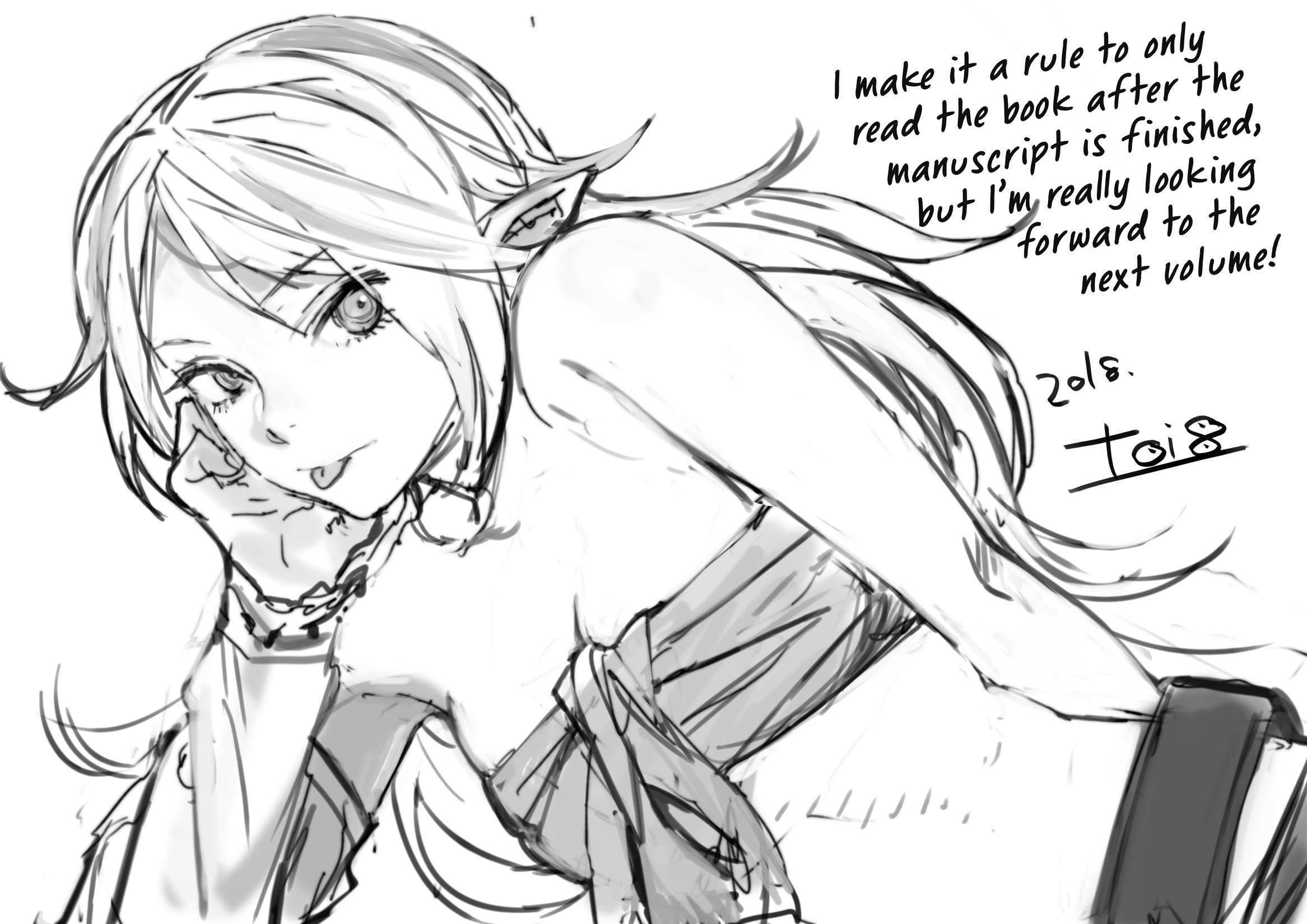
“I think so too. But please just think of it as a blessing from Master toi8 and take it.”
“Right... It makes me feel a bit itchy, though.”
“As humble as ever. How about you just be happy about it?”
“I don’t know what to say.”
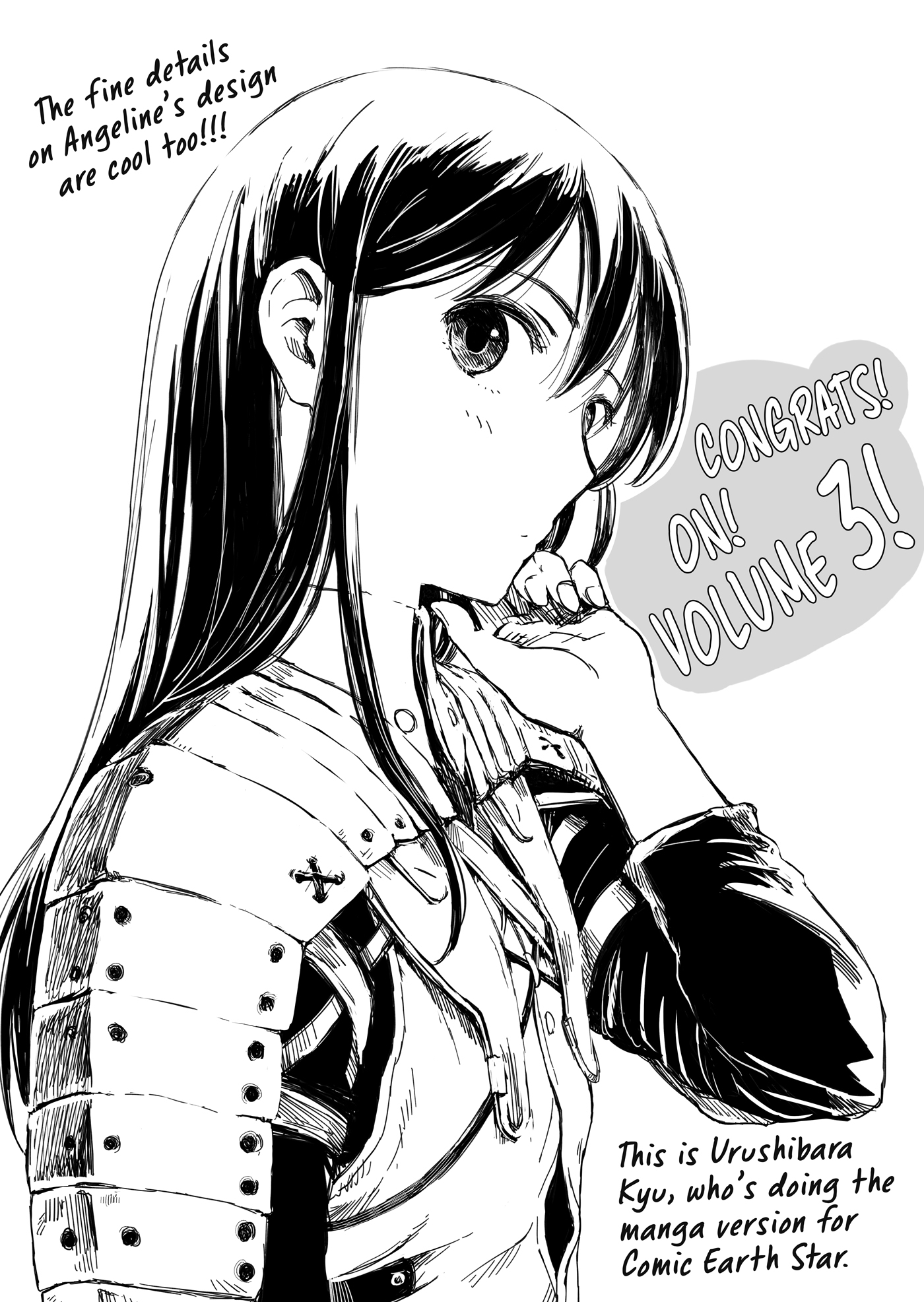
“All right, then look at this manga. I think Urushibara-sensei really outdid himself here.”
“Wow, you’re right... Yeah, did I ever move that well before?”
“He drew you ten percent better. Be grateful. So there, it came to me. The manga is, needless to say, wonderful—both the cover and the illustrations. The sole and greatest flaw of this book is the writing. In that regard, the manga is wonderful. There’s all sorts of unnecessary text at the end of the book, but that’s all well and good because you can just skip over it. So how about I just leave it to the manga to tell the story? I’ll get rid of all the prose and leave only Master toi8’s illustrations. In the first place, how am I supposed to be happy when such gorgeous drawings are squandered on hideous writing? It’s nothing but trouble if the cover is so good but the contents are like this. Don’t you think so?”
“But if that’s the case...what happens to you?”
“Right, that’s the problem. I can’t go around proudly calling myself a great author anymore. No, don’t say that I’m not great. I’m not asking for the truth right now.”
“I don’t get what you’re trying to say...”
“I’m trying to say that the original author is the worst part of it, but everyone supporting him is incredible. When you really get down to it, it’s downright cringey for the author to have a conversation with one of his characters in the afterword. ‘There you go again with your try-hard pseudo-poetry. This is why the readers are going to give up on you.’”
“Then, you can just...not do that, right?”
At the start, I wrote that I had nothing to write. The clouds flow by, casting a shadow over the brilliant sun. Now the air is much cooler. The man slouches in his chair as he flips through the pages of the book.
“So, are you done?”
“Yeah, just a few more lines. Making it pure dialogue is nice. I can get in so many lines while saying less.”
“But I’m surprised you got three volumes out of it...even if the cover and illustrations are great.”
“You’ve got that right. I’m thinking the readers are going to grow sick and tired of the slow pacing. Next time, I want to throw in something that will shock them. Maybe I’ll throw in a random slasher to stab you in the gut. What do you say?”
He never really replies when the author asks him about these things.