Children of the Battlefield
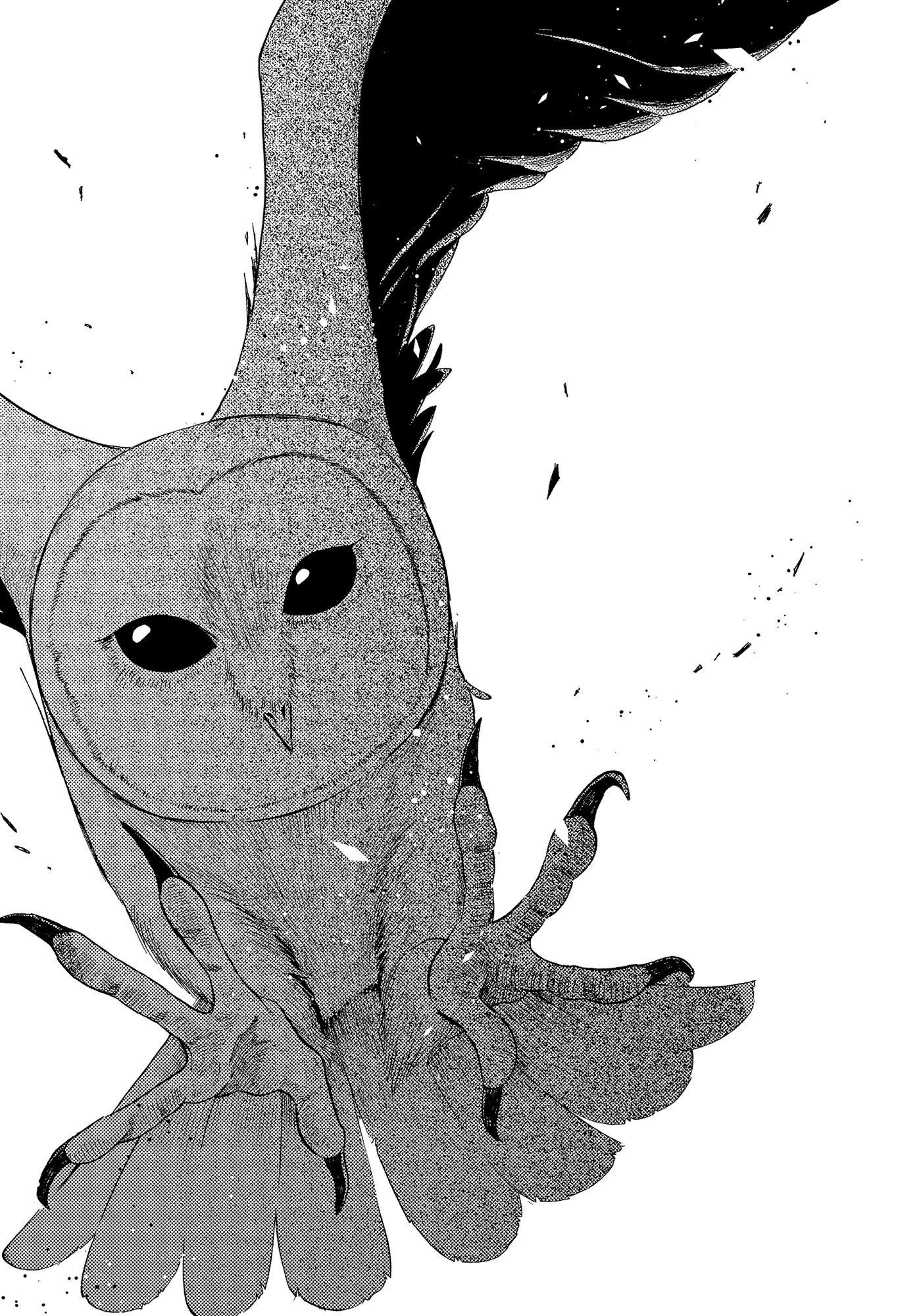
Children of the Battlefield
Chikashi Yoshida
“What is possible will not do. The safe and obvious approach will not be satisfactory. We must employ difficult methods, improbable methods, even methods deemed entirely impossible. The eyes of the world are upon us.”
—Winston Leonard Spencer-Churchill
English Prime Minister
during the War with Germany
1
Summer, 1940—
The British Empire faced the greatest threat in its history.
Nazi Germany had swept through France. Now, with England as their next target, they stretched out the evil hand of invasion, with the Luftwaffe standing at the forefront of these efforts. Nightly airstrikes dropped bombs on military airports and radar stations alike.
The RAF fought desperately, but theirs was a losing battle. If the Germans gained control of the skies, their panzer divisions would land on British soil.
And England had no means to stop them.
First, England’s weapons were vastly depleted. Operation Dynamo had successfully retrieved most of the BEF from Dunkirk, but they’d been forced to leave the bulk of their heavy weaponry behind. Scarcely any firepower remained.
Morale was equally low. The surviving soldiers were battered and shaken, and the hastily assembled Home Guard existed primarily on paper, of little to no use in actual combat.
Diplomacy might prevail where military strength could not, but, despite their weakened position, London continued resisting. The fate of England wavered on the edge of oblivion, a candle in the wind.
Yet an unorthodox defensive strategy came into play. People borrowed the power of inhuman things, attempting to curse their treacherous foes. This tactic was hardly unprecedented, as there had been similar attempts made throughout the nation’s history. When Napoleon, Emperor of France, had planned to make landfall on England’s coast, Pitt the Younger’s government had employed the services of mages, witches, and alchemists to cast spells on their enemies, chanting, “Corsican Fiend, thou shalt never see Dover.”
History repeats itself. England, desperate once more, risked committing taboo in the name of magical defense…
“Air Raid Warning! Large German Squadron approaching quickly from SSW. Launch all interceptors. Repeat: Air Raid Warning! Launch fighter squadrons ASAP!”
Torn from my slumber by the roof’s loudspeaker, I reflexively flew out the window.
As the ear-splitting sirens sounded, pilots in flight suits ran this way and that. A day ago, this had been a quiet country airfield. Now, tumult and unease swirled about.
RAF fighters stood in rows on the green grass, guards swarming around them. They yelled to one another: “We finished refueling this evening, but ammo is only half done! How are the engines?”
“We won’t need to warm them in this heat, but the winds are less than ideal!”
“Better than getting bombed on the ground! Get these birds flying! Someone translate for the pilots!”
As there was nothing for an outsider to do, I was better off not getting in their way. I spied an easy chair made of pinewood, a large parasol perched behind it. I hastened toward it, knowing that was where he’d be.
“Pah! Even a glorious Pegasus like the Spitfire is a lame horse without proper crew and guards to attend her. If the mechanics at Supermarine heard this, they’d burst into tears.”
I didn’t need to hear the ranting in Japanese to know it was him. My master had been this unpleasant long before I’d ever begun serving him, but that didn’t mean I was prepared to let this pass.
I perched on the back of his chair and said, “Then no point importing them. You said the Japanese Navy would buy some if they proved themselves in battle, but at this rate, you’ll never convince the Ministry.”
“Sergeant Kirishima, you fail to understand me. The Spitfires are magnificent machines. I merely point out that their current handling leaves much to be desired. Bringing them back with us will greatly inspire the Navy Aviation Bureau. Naturally, we’d need a mountain of parts for the liquid-cooled engines, making them difficult to use domestically. Well…perhaps not. If we use them entirely on aircraft carriers, maybe there is a way…”
As I’m sure you can tell, my master was intelligent and sharp-tongued. Ordinarily I would tell you his name, but circumstances force me to withhold it.
They say the devil looks after his own, and he had in this case—my master is alive and well. To this day, he wields powerful influence in politics and business. Revealing his scandalous visit to England would create no end of trouble at home and abroad. The man himself seems to revel in the potential chaos of such a revelation, but I have no intention of getting swept up in his wake. Thus, in this piece, I shall merely describe him as Commander G. For the rest, I must rely on my reader’s discretion.
While I’m at it, let me introduce myself. My name is Kirishima. I’ve called myself by that name for a few decades now. I’m borrowing the name from the volcano where I honed my body and mind, but I’ve grown fond of it. Commander G called me Sergeant, but that was merely a nickname. I’m not in the military, and the Japanese Navy doesn’t have a rank called Sergeant anyway. When I was still in training, Commander G saw me lecturing some ill-mannered colleagues and told me I was like a drill sergeant. I’d begged him to stop calling me that, but Commander G isn’t the sort of man to change his mind.
“We’ll have to discuss a joint purchase with the army. They’re still dreaming about mainland planes, so it can’t hurt to take the lead on this. Of course, if England falls, all chances of a deal evaporate,” the commander said.
I had to argue that point. “The British Empire won’t end that easily. Look at these pilots. They’re all riled up to defend their homes.”
“Take another look, Sergeant. They aren’t even English. They’re Poles. The Germans occupy their homeland. They have nowhere else to go. This war is already over for them. They are but resting their wings here until they reach a place worth laying down their lives.” Commander G paused, silently mocking me. “Humans can live without a country, but a country cannot survive without people. By simply surviving, these men contribute to Poland’s restoration. There is no point in wasting their young lives here.”
“They’re patriotic. A quality you seem to lack.”
“You forget, Sergeant. I was a mage long before I was a soldier. I have no more patriotism than the stars that light the night. If I got hung up on that nationalistic nonsense I’d never be able to appreciate the true beauty of the world.”
“Then why stay in the military? Why not become a hermit somewhere?”
“Several reasons. First, I am at peace here. The military’s closed society is the ideal hiding place for a non-human. Secondly—”
“Don’t bother. It keeps you from getting bored, right? Like you always say.”
“Quite. Life is but a constant battle with boredom. I grow tired of being an observing officer. While God maintains his indifferent silence, allow me to assist evolution and creation,” he said.
Commander G rose to his feet and headed toward the line of sputtering Spitfires. When he rolled up his left sleeve, I knew what he was about to do.
He wore a bracelet disguised as a watch, which was giving off an unearthly glow. The Sanskrit carved into it was briefly exposed. An instant later, there was a flash of purple lightning as he began chanting at speeds that would astonish even NHK’s radio announcers.
“Eyelids, be as lead. Sleep like a maiden, fall like a hero, lie on the earth like the dead. Thy duty to oppose the rising sun…”
To kindle this spell, Commander G had sacrificed a Polish pilot; a mere boy. As Commander G’s spell finished, the lad lost consciousness and crumpled to the ground like a marionette whose strings had snapped. The RAF mechanics tried waking him, but he remained asleep.
“Looks like the pilot is out of commission! Very well! I shall fly,” said the commander.
A Cockney-accented mechanic with a beard like a daruma doll tried stopping him.
“Wait right there, guvner. You’re the observer from Tokyo, yeah? Ya join the battle, there’ll be trouble on both sides.”
“We can sort out the details once the battle is won. This base will be carpet-bombed in a matter of minutes. One less plane in the air increases the risk of such a scenario. Your countrymen’s blood, sweat, and tears made this plane. It’d be a shame to see it destroyed on the ground.”
“Don’t see how a bloody Jap’s gonna fly a Spitfire,” the man snarled.
“I can fly anything. Even a broom!”
I was the only one present who knew this wasn’t a joke. While I waffled between anxiety and resignation, Commander G quickly changed into a flight suit and climbed into the narrow cockpit.
“Ready for takeoff. Sergeant, you come, too. One must savor living on the edge of death or lose sight of true country beauty.”
“I’m more of a city boy. And the Spitfire’s a single-seater! How am I to join you?” I asked.
“My knees await!”
“Something tells me it might be a bit too snug…”
“Then fly alongside me! I won’t mind.”
“Don’t be ridiculous. You know my top speed’s only around seventy kilometers per hour.”
Depending on the type, a Spitfire could reach speeds of 586 kilometers per hour. I had no possible way of keeping up with one. I gave up arguing, fluttered my brown and white wings, and hopped into the space below the open canopy. The daruma-beard mechanic looked surprised.
“Guvna, ya gonna bring ya pet owl to the battlefield?”
Unruffled, Commander G replied, “This is no ordinary owl! And he’s not my pet. He’s my familiar.”
The Rolls-Royce Merlin II engine roared like a wild thing, and the plane started down the runaway. The machine had a dry weight of two tons, yet as it accelerated, the wheels easily left the ground. My body grew strangely weightless. It felt very different from flying on my own wings.
Handling the stick like an expert, Commander G cried, “What a responsive machine! No complaints on lift or speed. Wings are thin but sturdy. Should be quite easy to maneuver close to the ground. A skilled pilot could really show his strength in a dogfight.”
He spoke like a seasoned pilot. This was a brand-new model they’d rolled out ahead of schedule, its official name being Spitfire Mk IB. In time, this machine would be hailed as the empire’s savior, but during the Battle of Britain, many doubted its effectiveness. Then, as now, my opinion on planes was hardly that of an expert. But Commander G was like a child, delighting in his new toy.
I trusted he was right. He was the leader of the Naval Aviation’s elite acrobat team, the G Circus, so if he gushed about something, that thing was worth gushing about.
“This is the oil temperature gauge, and this is the boost gauge. There are notes stuck to some of them, but they’re all in Polish! Brings a tear to the eye, doesn’t it?” he said.
Watching Commander G fiddle with the instrument panel out of the corner of my eye, I swiveled my head the full 270 degrees, watching our surroundings. My neck had more than twice the number of bones as a human’s, allowing for such tricks.
I had found them. I could see far greater distances than a human could, and I had glimpsed the black specs on the horizon.
“Planes at eleven o’clock! Based on the direction, I assume it’s the Luftwaffe flying in from France.”
“Almost certainly. Our allies are headed for them.”
The other Spitfires accelerated through the air to engage the enemy. Our plane lagged behind.
“What? I thought you wanted to fight the Germans?” I cried.
“Oh, owl, lord of the forest, when did you become so bloodthirsty? I pick the foes worthy of my blade, that’s all. Those pilots who manage to break through the Free Poland Air Force’s formation will become fitting prey. We shall wait in the air above the runway, killing time.”
This was arrogant even for him, but he did have the skills to back up his bravado. Commander G was a real whizz with machines, and a cunning mage. Rarely a day passed that I didn’t regret becoming his familiar, but he was one of the top five pilots in the world.
Though the times favored aviation, Commander G was probably the first mage to abandon an eagle’s wings and embrace those newfangled flying machines. Astonishingly enough, he’d never once relied on magic to help him. Commander G had acquired his piloting skills through practice alone.
As something of an experienced flier myself, I often issued him warnings and found fault with his methods. I argued that bending the laws of the natural world with magic was a small price to pay for a better chance of survival. If we died, there’d be nothing to regret.
But Commander G insisted it was wrong to use magic in combat, stubbornly rejecting my arguments to the contrary. I told him his stubbornness would ensure an early death, but he wouldn’t listen.
Then, I heard a rumble like distant thunder.
“The smell’s turned sour. Looks like the fighting’s begun,” I called.
“You’ve got quite the nose, Sergeant. I can smell it myself: burning flesh and the scent of blood. The smell of death and destruction.”
“Who do you think will win?”
“If we trust the London bookies, I’d bet on England. They’ve the home-field advantage. They may get bombed to hell, but, if the pilots survive, they can soon join another squad. Same isn’t true for the away team though. The Germans have to get back to base in France or Belgium. The RAF may have thrown pride to the wind, and they’re scraping the bottom of the barrel in terms of crew, but that hard work will lead to victory in the—”
Before he finished his speech, I spotted a shift in the battlefield and yelled, “Incoming! One o’clock, in the clouds! German! Altitude: 2,500. Distance: 8,000 and closing!”
That was definitely a Messerschmitt Bf 109. Small for a fighter plane, it was the Luftwaffe’s main firepower and the Spitfire’s eternal rival.
Its speed and firepower made it adept at hit and away tactics, and the technical specs far surpassed the majority of England’s planes. Only the Spitfire, with its superior maneuverability, could really stand a chance against it. Even then the Luftwaffe pilots were frighteningly skilled and victories hard fought.
I watched the enemy plane with caution and awe, but it behaved quite oddly. There was no one on its tail, but it turned and zigzagged, eventually even doing a somersault.
“Strange. Is he taunting us?” I murmured.
“I doubt that. The pilot’s panicking.”
Commander G slid his plane sideways, maintaining speed while lowering his altitude to easily get behind the enemy plane. All he had to do was pull the trigger, and his bullets would tear the other plane apart.
But Commander G’s finger didn’t move. I realized why soon enough.
There was something on the Messerschmitt’s wings!
It couldn’t be human. It was clearly a neighbor and looked much like a rabbit. It was all black and brown, maybe fifty centimeters tall. Two pointy horns sprouted from its brow. A pair of tinted goggles hid its eyes, but the face was definitely fearsome.
It used its sharpened front teeth to chew through the Messerschmitt’s wing, opening a huge hole in the plane’s body. It yanked out some wires, slurped them up like spaghetti, and gave the pilot a diabolical grin.
The sight of something so unnatural, even in the chaotic midst of a battlefield, had driven the enemy pilot to panic. The Messerschmitt’s nose turned a bit too far off course, and gravity dragged it into a downward spiral.
“Sergeant, this might get a little rough.” Commander G cranked the throttle all the way open, rocketing us to full speed. We closed the distance to the falling plane in no time, and our Spitfire nearly rubbed wings with it.
“Question for the gremlin! Who do you contract with? What reckless fool is using magic in a war between nations?!”
I was sure the gremlin heard the commander’s question, but it didn’t reply. It realized we weren’t its allies though and waved its sausage-like index and middle fingers in front of its face, lips twisting. Then it bent its knees and jumped.
A moment later, wings sprouted from its head. Ah, so they hadn’t been horns after all. The wings were several times longer than the gremlin’s body and swiftly carried it away to the west. Meanwhile, the Messerschmitt regained control and flew toward the south.
The sounds of battle had died down. The gunfire stopped and the dogfight had ended as abruptly as it began. Victory and defeat had lost all meaning, and only Commander G’s tirade echoed in my ears.
“Someone stupid enough to commit taboo here? Who has the nerve to bring magic into a war between nations?”
Hoping to calm him, I asked, “Do you think it’s an English mage?”
“What? Don’t be ridiculous. A mage with my level of training can turn stone into metal, give wings to fish, and rot grain in the fields. Naturally, I could make a gremlin do my bidding before breakfast. But we would never do that! We know there are forbidden acts! One of the worst things you could do is show up where people are killing each other and start flinging magic around. English mages should know that perfectly well. This is some shameless witch or perhaps a desperate alchemist. And I have an idea who it might be…”
He thought for a full five seconds, then gave me his order.
“Sergeant Kirishima. Fly to the Isle of Man.”
It was an island stationed in the sea between Ireland and England. Commander G had planned on visiting the place.
“You’re going to Castletown Harbor, to the south. You’ll find an old, protected cruiser moored there. You’ll have to talk to the lieutenant. Using magic in war leads directly to the nation’s ruin. I’ll be right behind you, so you smooth the way.”
Without allowing any questions, he opened the windscreen and shoved me out.
“Wait a minute! I’m a Tyto alba, the sage of the forest, positioned at the pinnacle of the food chain, and the most charming animal alive! You would use me as a mere errand boy?”
“Yes, I would. You asked to be bound to me, remember? It was hard work sending your wife and daughter to a better place. You could stand to do as I say sometimes.”
How could I possibly refuse him now? Reflecting on the choice I’d made back on Kirishima Mountain, when I’d first met Commander G, I flew away from the Spitfire…
2
Kiel, located on the Jutland Peninsula, was the largest port the Kriegsmarine had.
Some strange objects floated in one corner of the Deutsche Werke shipbuilding company there. At a glance, they looked something like submarines, but were definitely not U-Boats.
First, they were entirely the wrong size. They were nineteen meters long, and four and a half meters across—tiny in comparison to a U-Boat. They had no means of propulsion and couldn’t move on their own. These were more or less just floating cylinders.
There were four in all. Known as Wieges, these were intended for unmanned operations, but the first tube alone was fitted with a control room, allowing for a small crew.
KptLt Günther Prien stepped into this control room. Prien was Kriegsmarine’s most famous U-Boat commander and was currently hard at work arguing with a mysterious figure.
“It’s not that I don’t trust you. I was able to enter the naval base at Scapa Flow and sink the Royal Oak because of the navigation course your auguries plotted. I don’t profess to know the difference between magic, alchemy, and oracles, but all I need to know is that my U-47 returned triumphant. Your strange arts have earned my respect, but this next mission is too much. You won’t explain your reasons to me, yet you expect me to take you to the middle of the Irish Sea?”
The middle-aged, special oberleutnant to whom Prien was speaking settled his tiny frame in the cramped seat. He replied, “Großadmiral Raedar has approved this plan, and so has the Führer himself.”
The man’s name was Henrich Hörbiger. He was a special technical oberleutnant placed with the Kriegsmarine. He’d lived much of his life in England, and thus spoke with a thick English accent.
“And the success of this mission depends on the judgment and actions of the U-Boat commander. KptLt Prien, without your cooperation the entire operation will collapse, in which case the occupation of England is impossible, and Germany’s future is bleak.”
“I never said you wouldn’t have my cooperation. I’m saying if you want it, tell me what I need to know. What is this tube I’m standing in? You want U-47 towing four of these, but why should I haul something when I don’t even know what it is?”
Hörbiger thought Prien’s viewpoint was entirely justified but couldn’t risk telling him more.
“As far as the Wieges are concerned, I’ve adopted an idea proposed by the flight engineers at Peenemünde. Originally, they were to transport rockets or missiles; they’re simply containers a submarine can haul, an ultimate weapon that will allow us to bring any city within bombing range. We’re still in the planning stages there, so I borrowed a piece of it,” Hörbiger said.
“Forget the outside. The cargo’s the problem. I’ve heard the Wehrmacht are developing flying weaponry, but they haven’t completed anything yet. So what do you want to haul in these?”
“I can’t persuade you to let me share the truth once we reach the Irish sea?”
“This is a counterintelligence measure? My lips are as tight as my fist,” Prien said.
“No. I want to prevent a loss of morale. Knowing the truth will frighten the U-47 crew, and they may refuse to take part in the mission.”
“You think that little of my men? They’re brave warriors. They’ve got guts. They aren’t afraid of anything. They’ve faced death countless times.”
“But they’ve never faced anything that came walking back from death. Right?”
When Prien fell silent, Hörbiger continued.
“I’m sure you’ve heard the Luftwaffe are struggling with their raids on England. Are you aware of the reason why?”
“The Messerschmitts have shorter legs than the Japs. Can’t even fight for more than fifteen minutes.”
“Certainly a factor. But have you heard any stranger stories? The returning pilots have had some bizarre experiences, claiming they were attacked by strange monsters during bombing runs.”
Prien’s face twisted like that of a student with a failing grade.
“Mere fables. Embarrassed pilots concocting stories about gremlins to hide their own failures,” he said.
“No. Gremlins are real. England has brought alchemists into the war.”
“We’re hardly in a position to criticize. Our command is up to the same thing. The Führer decides when raids happen based on what his fortune tellers prophesize. He’s completely on board with your relative’s World Ice Theory.”
“We can gripe about my great-uncle on another occasion. Occult research isn’t the issue; actually bringing it to the battlefield is. London may be at a disadvantage, but for them to actually turn this into a magical war…”
Hörbiger’s countenance was grim, but his real feelings were quite different. He was barely suppressing a laugh.
Prien wasn’t a fan of this entire conversation. “So we’re retaliating, with our own self-described alchemist in charge?”
“Indeed. England violated the taboo first, so we need hold back no longer. That’s why Berlin chose to activate Operation G. We were right to prepare for every eventuality. I am overwhelmed with admiration for the Führer’s foresight and wit in giving us those orders.”
After a long silence, Prien spoke as the U-Boat commander.
“We have no choice but to obey orders from the Seventh U-Boat Flotilla command. But if we must do this, let us do what we can to ensure victory. There is little chance of success when we cannot trust our own comrades. I alone should know the truth at least,” he said.
At last Hörbiger said what he really felt. “I intended to do just that once we were at sea, but, if you insist, I will tell you all the details of Operation G now. What is it you wish to know?”
“The specific location of our mission.”
“The Isle of Man.”
“That’s a dependency of the British Crown, correct?”
“Exactly. That island is very important to mages. Many alchemists gather there. London must have convinced those alchemists to join the war effort. Given the nature of the island, the mages will be in charge. It’s likely the magic craft artificers will be doing their part as well.”
“Wait. I heard these people work alone. They aren’t the type to band together,” Prien said.
“You are correct. The only reason they would unite is if they were aware of our ambition.”
“So the G Program has been compromised?”
“No, the details are likely to remain a mystery. We still have a chance to strike first. Our best and only chance of landing a blow on England’s alchemists is to hit directly where they gather on the Isle of Man. We especially need to turn Castletown to ash.”
“Sounds like you’ve done your homework.”
“No need. Before the war I lived there for fifteen years, studying as an alchemist. I was disguised as a merchant.”
“Hold on one second. The Isle of Man isn’t exactly a small island. It’s at least as big as Bornholm in Denmark. How is one U-Boat going to level the place? If we’re really trying to conquer the island, we’ll need to bring many battleships and their guns.”
“We will not win with firepower, only brute strength.”
“You’ve lost me. You’re planning a surprise attack from the air? Or do you expect my crew to suddenly play army?”
“No, we have infantry ready. These Wieges are underwater containers that will transport them.”
They were both silent for several seconds, then Prien shrugged.
“No time for jokes in war. How many can you fit in these tiny tubes? At best, twenty? Four tubes, so that makes eighty men? Not even enough to scout the place.”
Hörbiger’s poker face never wavered.
“We will bring only fifteen soldiers, but every one is a special ops soldier who has overcome death. We shall also bring my darling children, only just born. I have waited years for this. My own flesh and blood. I guarantee they’ll slaughter their objective: the true force controlling these gremlins. If we can but eliminate one woman—she who rejected me in every imaginable way—the threat will disappear. If we win the war of magic, England’s occupation will be achievable, and my own desires will vanish with time…”
Oberleutnant Hörbiger fixed the other man with a steely gaze.
“KptLt Prien, science’s ascendancy over magic is right around the corner. I wish to carve my name into history as the last alchemist before science becomes so advanced that the difference between it and magic is impossible to perceive.”
3
My orders were to fly right to the Isle of Man, but it took a full seven hours to arrive, and I hadn’t been dawdling. Rather, I’d endured a series of trials and tribulations, and had used all the wisdom, courage, and gumption I possessed to overcome them.
The distance from Southampton to the Isle of Man is 420 kilometers as the bird flies. But rather than flying directly across the Irish Sea, I decided I was better off flying up the west coast of England to St. Bees Head and making my crossing there. It added one hundred kilometers to the overall journey but proved to be worth it. One impasse after another filled my path.
In Birmingham, I was caught in an unexpected bombing raid. High-speed bombers—Heinkel He 111s—chased me, and I lost half the feathers on my left wing. In Manchester, I took shelter in a large cathedral to rest my wings, only to be shot at by anti-aircraft fire. I’d like to believe this was an error, but perhaps the enemy knew my true nature and deliberately tried to kill me. In times of war, people naturally want to eliminate those who fall between the category of friend and foe.
The worst was the Cambrian Mountains. Desperately hungry, I’d landed and was eating a wild rat when a gang of local magpies beat the hell out of me. Just as in the Kirishima Mountains, I discovered that outsiders were forever unwelcome.
At last, I fluttered free of my pursuers and began my flight across the Irish Sea. It was a fifty-kilometer journey before I could reach the Isle of Man, but, with my wing’s injuries, that distance seemed foolhardy.
Was there a boat around? As the years passed, I’d grown twice as heavy as the average barn owl, so driftwood may well sink under me if I tried to float. I was much better off resting my wings on a passenger ship.
Prior experience suggested I would be welcomed. In Japan, the word for “owl” (“fukurou”) sounded exactly like words meaning “no hardship” or “bringer of good fortune.” An owl on a ship was seen as good luck.
In Europe, some fools saw us as quite the opposite of luck, but there were also those who treated us as symbols of wisdom. Sailors tended to be particularly superstitious, so if a bird they regarded as auspicious landed aboard, they’d often feed that bird. Turning my eyes into saucers—rather, like radar dishes searching for an enemy fleet—I scanned the ocean and located a gray object on the horizon.
A long ship with four smokestacks, it was clearly no merchant vessel. A number of single-mounted guns stood on deck, and the White Ensign flew at the stern. From the mast hung a flag with three legs arranged like a shuriken, a symbolic image used on the Isle of Man since ancient times. I was relieved; my season of horrors was over. This must be the protected cruiser Commander G had ordered me to find.
England possessed a great number of colonies abroad, and protecting them required a great number of ships with substantial range. Trying to balance cost versus ease of use had resulted in these protected cruisers. However, their heyday had been forty years ago. The more modern light cruisers were in fashion these days, and most protected cruisers had been scrapped. This ship I’d found was clearly an exception.
As I descended toward it, I became certain this was the right ship. As a familiar, I had a heightened sense of smell, and, right now, my senses warned me that this ship possessed an unusual level of spiritual energy.
The scent of magic was overpowering, drawing me like a moth to a flame. Acutely conscious of my injured wing, I descended. Firmly gripping the rear mast with my talons, I took a long look below.
A magic circle drawn on the front deck instantly caught my eye. I had no idea what the effect of it might be, but an alchemist must have drawn it. Mages like Commander G preferred to disguise their true nature, hiding themselves in the human world, so it seemed unlikely a mage would leave a magic circle around to announce their presence.
Alchemists tended to hide from human eyes as well, but given the need to pass on their knowledge, they were more likely to demonstrate their skills. Based on the circle’s sheer level of artistic detail, a highly trained alchemist must have created it.
I flew from the mast to the top of the bridge. Ships this size had open air lookout posts. I planned on speaking to the sailor on duty there.
As I descended, I saw someone running up the gangway. It was a naval officer wearing the pure white summer uniform.
I was surprised—I hadn’t expected to see a woman on board a ship.
Her posture was impeccable, yet she didn’t appear stiff. She looked directly at me. Her features were even, so it was likely she’d be considered beautiful, but she was also fairly advanced in years. The braided hair under her military hat was clearly white and fraying. I couldn’t tell her exact age, but I doubted she would object to being called old.
“I apologize for the sudden intrusion. I believe this is the cruiser that protects the Isle of Man. I am here on behalf of Commander G from the Empire of Japan. They call me Kirishima. My business is urgent, so I would like to request an audience with the captain.”
Though I was a familiar, my tongue was ill-shaped for human speech. I had acquired a skill that allowed me to communicate telepathically with others. Simply by focusing on them, my intent was expressed without the need for words.
Clearly understanding me, she replied, “No need. I am captain of the Princess of Wales, Lt. Rose Diana Gandly. I knew you would be coming.”
Magic power radiated from her, wrapping around her head and limbs like silk thread and giving off the occasional burst of discharge. I could sense no spirits, ghosts, or demons in the vicinity, so, based on that, I concluded she was neither a witch nor a mage. Rose was an alchemist, and a very good one. I had to keep a cool head about me or I’d be swallowed up.
“I thought I had disguised my aura as a familiar, but to be detected by one of your skill is hardly embarrassing.”
“No, I didn’t detect your approach with magic. Commander G phoned me. He said a sergeant named Kirishima was on his way and that I should have some food ready. He was quite a rude, ill-mannered sort of mage.”
Damn him. What phrasing! Like I was a child. “Allow me to apologize for my master’s uncouth ways. That I am extremely hungry, however, is true. If you are willing to provide, I will happily partake.”
Lt. Gandly held up her arm like a falcon trainer. Feathers hid my feet, but my talons were much longer and sharper than they looked. If I wasn’t careful, I could hurt her badly. I landed as slowly as I could, doing my best to make it easy for her to catch me.
“No need to be so careful. I’m used to handling familiars. Like so,” she said and snapped her fingers. A sinister shadow appeared, compressed itself to a single black dot, and the space around it warped and expanded. What emerged was an apparition that resembled a blackish-brown rabbit.
A gremlin sat on Gandly’s other hand. No doubt about it, this was the same one we’d seen on the Messerschmitt. I prepared to chant a spell that would harden my beak into obsidian, but the gremlin seemed to bear me no ill will, making no move to attack.
Lt. Gandly whispered something to it in a Celtic language I didn’t understand. The gremlin nodded, unfurled its long, wing-like ears, and flew away toward the sunset.
“I ordered it to search for a different visitor. It would just get in the way of our talk.”
“I have some questions for that gremlin, too,” I said.
“I’ll answer those questions. I’m afraid it understands neither English nor Japanese.”
She took me to the captain’s cabin, where I was finally able to eat.
I said I was fine with a rat or a mouse, but Lt. Gandly gave me smoked herring. She called them “kippers”—apparently the Isle of Man was famous for them. I’d have preferred the fish raw, but preserved foods had their own appeal. I soon cleaned the plate, which met with her approval.
“You have the best appetite on the entire Princess of Wales,” she said.
“I am an omnivore who will eat basically anything. My kind will even eat each other if it ensures our survival.”
I knew how ominous this sounded, but if I didn’t flash a little steel I was unlikely to get anything worthwhile out of her. Commander G hadn’t given me any specific instructions; he’d left the negotiations to my discretion. If she gained the advantage over me, I was done for.
The lieutenant sipped her tea. “Humans are the lords of creation; owls the sages of the forest. We wouldn’t dream of mocking you. Not only do we eat each other, we engage in vicious wars against our own kind. Survival requires healthy appetites and lusts. My subordinates all eat like birds. No offense.”
“I eat more than most birds, to be certain. My lusts have not yet forsaken me either. Though they are no match for human men in either quantity or quality,” I said.
The lieutenant gave me a mischievous smirk and said, “There’s not a single man on this ship. The Princess of Wales does not allow men. All 318 souls on board are female.”
A ship crewed entirely by women? Astonishing. I could imagine why that would be necessary, but this was hardly the proper time to dwell on that, nor was the lieutenant the proper company.
“England has grown desperate enough to put women on battleships? You have my sympathies. However, I am here regarding your operations against the Germans. Perhaps your contributions to the war effort…”
The lieutenant sipped her tea, taking this in stride.
“Sergeant Kirishima,” she said. “If you stop beating around the bush, you may get more useful information out of me. First, how shall we address each other? I shall address you simply as ‘Sarge,’ so would you call me Rose?”
Her English was clipped enough that I could easily understand her, but there was clearly a trace of an accent. Cockney, I thought, much like the daruma-bearded mechanic I’d met in Southampton.
“I beg your pardon, but I value my life too much to call a ship captain and an elder by their first name.”
“What do ages matter to us? You’re over a hundred yourself,” she said.
If she knew that, then I had no choice but to accept her harrowing request.
“Very well. Rose, I am here to confirm that you’re the one sending gremlins into the war.”
“I have no intention of denying it. I’ve sent him out seventeen times today alone.”
“Why go so far? My master was quite irate. No war is worth bending the rules of the natural world.”
“England is too desperate to obey the rules of engagement. The fall of nations is nothing new, but we must avoid losing the alchemical knowledge and techniques we have built up over the years. For that, we must leave no stone unturned.”
“So the ends justify the means? Yet you fight to preserve your traditions rather than to save your country. I suppose an old alchemist has no more patriotism than mages and witches do,” I grumbled.
“We simply place a little more emphasis on imparting the knowledge we have gained. And the ends don’t justify all means. I’ve told the gremlin to only damage their planes, not kill them. That apparition hasn’t killed a single German pilot.”
“Killing the enemy isn’t the priority in any battlefield. Injuring or disabling is always preferable. If they survive, they must be treated, and that reduces the enemy’s ability to fight.”
“Correct. We just want them to run away. We want them to return to base and rant about the monster that attacked them. That was the only approach I could think of that would keep magic and alchemy from becoming the military’s plaything.”
“That sounds inherently contradictory.”
“How do you teach a stubborn child that fire is dangerous? Have them put out a match with their fingertips. It will burn them, but they’ll know better than to play with fire again.”
“So in this analogy, the Germans are the stubborn child, and you’re using the neighbors as your match?” I asked.
“What choice do I have? Berlin plans to put a neighbor far more powerful than a gremlin on the front lines. They’ve been working on it for years and have finally gotten to the point where they can transport it with their U-Boats.”
A possibility crossed my mind, and I felt all my feathers stand on end. A neighbor more powerful than a gremlin? What could that be?
“Rose, I understand your predicament. Yet I remain concerned. Your side has now used the neighbors first. Is that not just giving the Germans an excuse to use theirs?”
This old woman must have been very beautiful when she was young, but now her expression twisted into something rather unattractive.
“That’s my goal. The gremlins are nothing but bait. I’m going to draw them out, and once they’ve shown themselves, crush them completely. That’s why I put the Princess of Wales back to work,” she said.
This expression caught my attention. “This ship seems to be nearly as old as the two of us. And with only women on board, how much use will it be in a fight?”
“You think I have no plan? Give me a little more credit. This is the one ship in the Royal Navy officially classified as Special Alchemy Craft.”
She shook her head and continued. “There are plenty of skeptics on my side as well. The rest of the fleet calls this ship The Flying Dutchman.”
My feathers ruffled at the name. The Dutchman was an infamous ghost ship that had sunk near the Cape of Good Hope, and rumor said it was doomed to wander the seas until Judgment Day. A Wagnerian opera had made it famous. “Flying Dutchman” certainly wasn’t a good nickname.
“Unfortunate. Why ‘Dutchman’ when you’re all English?”
“Have you heard of William, Prince of Orange? Perhaps you’ve heard of William III, who brought about the Glorious Revolution. He began as Stadtholder of Holland and was later crowned King of England. I am heir to a branch of his family,” she said.
Nobody worth anything bragged about their ancestry. Yet she spoke not with pride but something closer to annoyance.
“Poor ship, everyone treats her like a ghost. She was finished forty years ago. The official name has changed any number of times, but she’s still got life in her. The equipment is new, and many of the crew are experienced alchemists, though the majority are still in training.”
“A ship crewed by alchemists? I’m surprised the hardheads in command allowed it.”
“It wasn’t easy. They rejected the proposal from the Isle of Man council, but fortunately Churchill understood. He’s often been accused of being a warmonger, but to ensure victory he alone considered the impossible.”
“So the Prime Minister himself has signed off on this? It still sounds like you’re playing with fire to me. If you provoke the Germans, they’ll come at you with everything they have.”
“And then we will defeat them. Dictators do not take kindly to failure, so a decisive defeat here will mean they never use magic and alchemy in war again. We’re fighting here so we can keep our existence hidden,” she explained.
“You sound very confident. You have information on your enemy?”
“Naturally. I know their secrets, and I even know the name and identity of the man behind their plans. Oh, is something wrong? You winced, Sarge. Never seen an owl do that before! Are you hungry again?” she asked.
“I am merely surprised. If you know the enemy’s name, then you’ve as good as won. If it is no secret, would you be prepared to share?”
There was a brief silence, then she said, “’enrich ’örbiger. A mad devil.”
That sounded clearly wrong. I assumed she was trying to say a male, German name, but I didn’t recognize it. Perhaps he just had a very strange name, but I’d heard Cockney accents tended to drop the H. In which case, his actual name…
“Hmm. So this Henrich Hörbiger has a history with you? Oh, your brow has just furrowed, Rose. I believe you already have plenty of wrinkles, no need to add any more.”
“I know why Commander G praised you so. He told me not to underestimate his forest sage.”
“I appreciate the praise, but shouldn’t you tell me about this Hörbiger now?”
“Yes. He had a mansion on the Isle of Man and lived there for quite some time, earning himself a reputation as an eccentric. Even more rude and ill-mannered than your master, he had an unusual aptitude for alchemy but lost his way and fell to ruin. To me, he was a sympathizer, a betrayer, and even a man I loved. But all of that is in the distant past. Now he is merely an enemy who must be defeated and will be attacking tonight…”
I’d lived many years and seen many overconfident people. I knew full well that most of them met tragic ends.
“Rose, your plan sounds egotistical, as if the Princess of Wales sailed out solely to crush this man’s ambitions.”
“It has done exactly that. One must become evil to fight evil.”
“In Japan, we have something called the Night Parade of One Hundred Demons. If apparitions appear visible to the eye, that means what you’re doing is extreme and unjustified, no matter its purpose. Win or lose, the resulting grudges will stain the world for time to come.”
I knew she was well aware of this, but I had no other argument to make. A wave of sadness passed over her face.
“I have one question for you,” she said. “Commander G implied that you requested the familiar contract with him. Would you tell me why?”
Commander G could be a chatterbox. I wasn’t sure how much he’d told her, but lying would get me nowhere, so I told the truth.
“Once, I had a wife and hatchling. My wife was barely older than a hatchling herself, and the child was the spitting image of her. They enriched my world with their mere presence, but my lack of magical ability resulted in them becoming trapped between worlds. I could neither restore them to life nor send them on their way to death. They forgot how to come home, lost their place in this
world and the next, suffered in darkness without end…until Commander G released their spirits. That action alone made me deem him worth serving. Although, if you ask if I have ever regretted it, I am not sure what I would say.”
“I see. Then you will never be anything more than a mere spectator. I know it was my idea, but can I ask that you not call me Rose again?”
“Very well. Lieutenant Gandly, I am prepared to see these events through as a spectator.”
No sooner had the words left my mind that the phone rang shrilly. The lieutenant picked it up, and the voice on the other end spoke in rapid English.
“Lieutenant, the fishing vessel stationed at the designated dowsing point has spotted an apparent periscope. As per earlier orders, this ship is making its way there full speed ahead.”
Lieutenant Rose D. Gandly rose to her feet, and, with a manner that would make even the Knights of Stuart obey, proclaimed, “The hunt is on!”
4
“Kapitän Prien. I am grateful for your help conveying the Wieges this far. It’s time to set them free. Please cut the Nabelschnur.”
In an iron cylinder adrift on the night sea, Special Technical Oberleutnant Henrich Hörbiger spoke into a headset.
“You sure? Without support from the U-47 you’ll have no means of getting home.” KptLt Günther Prien’s reply was clearly audible. The control room on the first Wiege had a comm wire running directly to it. There was no noticeable static on the line nor any risk of being overheard.
“I never intended to return home. I am prepared to slaughter the enemy before us, make landfall on the Isle of Man, and occupy it.”
The coldness in Hörbiger’s voice rattled even Prien, a man rightly considered implacable. After a moment, he replied, “I respect your fighting spirit, but make sure that enthusiasm does not prove your downfall. We’ve a long war ahead. It would be a shame to lose a man of your talents here.”
“I disagree. The war will end tonight. Once the world knows what my children can do, England will be forced to settle things peacefully. The battle tonight will end the war in Europe.”
“That sounds like a boast, but, if you’re a real alchemist, I imagine you are capable of just that,” said Prien.
“Kapitän, you successfully navigated us through the Dover Strait, a feat akin to magic. Now it’s my turn.”
“A shame I can’t personally see a real alchemist demonstrate their full power. This is the last contact we will have. We’ve spotted a ship off the east coast of the Isle of Man. A big one. Distance: 120,000. If you’d like, the U-47 could sink it with our torpedoes.”
“Let’s be more prudent. My bitter enemy is aboard that ship. A U-Boat could never hope to harm it.”
“My U-47 has sunk battleships, yet it’s not up to this task?” muttered Prien.
“It is not. That ship is the Princess of Wales, formerly known as the protected cruiser Andromeda.”
“As I recall, all ships of that classification were scrapped.”
“It’s an old ship, commissioned in 1899, so it’s forty-one years old now. Rare for a ship to ever get that old. 140.7 meters from prow to stern, standing dry weight of 11,000 tons, top speed of twenty and a quarter knots. Removed from the front lines in 1914, she underwent several name changes, and was used to train young sailors and as a torpedo school.”
“You could learn all that reading Jane’s Fighting Ships. No need to fear some fossil.”
“But there is! That ship is no longer a protected cruiser. It’s become a Special Alchemy Craft and is a grave threat indeed. The crew is entirely female, every one of them an alchemist or someone with similar powers. Odds are high they’ve already detected the U-47. KptLt Prien, leave the rest to me. Make your retreat.”
“Wait. You can’t just say the crew is all women and hang up! Who’s the captain, some old witch?”
“Neither a witch nor a mage. Her name is Rose Diana Gandly, chief alchemist of the Isle of Man. She’s certainly quite advanced in years, though she never told me her real age. Either way, she has clearly lived far too long. The time has come for my children and me to snuff her out.”
“Sounds like this ship’s captain is your primary target,” Prien murmured.
“I admit it! I developed Project G primarily to send that woman to hell.”
A moment after acknowledging this truth, the darkened control room’s clock let out a soft warning alarm.
“KptLt Prien, it is time. I will carry out my plan. If you wish to remain alive, put some distance between yourself and the Wieges.”
“Will you really be okay alone? I’d planned on observing and supporting from offshore.”
“I am always alone. I will defeat the woman who sentenced me to such isolation and then die in peace. My life can have no greater meaning. Please, do not get in my way.”
After that, Kapitän Prien gave up his attempts to convince the alchemist. He reverted to a professional tone, signing out with, “Roger. U-47 will retreat at full speed. May your mission be successful.”
They spoke no more. The Nabelschnur—the towing cable that housed the comm line—had been severed, and the four Wieges were no longer connected to the U-47. The Wieges, with no comm capabilities, were now mere iron tubes floating in the ocean, yet Hörbiger felt no fear. Rather, a sinister sort of elation washed over him as he turned his attention to the instrument panel.
“G Series. All fifteen units steady at eighty-five percent awakening. No abnormalities detected.”
He announced his check aloud, both to prevent careless oversights and to temper his excitement. Hörbiger viewed himself as but a component in the plan, a mechanical part that existed to perform this task. In the past he’d allowed his emotions to get the better of him, ruining everything, and this was the result. His opponent acted exclusively on her emotions. Becoming a machine was the only way to defeat her.
“Filling ballast tanks on tubes one through four. Monitoring angles, shifting to vertical positioning.”
A dull pumping sound echoed through the cramped control room. He listened as the ballast tanks beneath his feet filled with water. In sixty seconds, the Wiege’s tail was below him, leaving only the nose above water. To an
observer, they appeared to be on the verge of sinking, but as these vessels had been designed for aquatic launches of explosive missiles, this was normal operational procedure.
“Pyrotechnic fasteners activated. Nose cones released,” he said.
A muffled explosion sounded overhead. The sudden loss of pressure shook his eardrums, but Hörbiger ignored this, clutching the microphone.
“Earth, draw near. Fire, dance. Water, swell. Keter, Chochmah, Binah, Chesed, Gevurah, Tiferet, Netzach, Hod, Yesod, and Malchut; the ten sefirot with Da’at added, become emeth. I speak for the Shem HaMephorash, and as your father, I now release the seal upon thine eyes. Awake, Golems!”
Beneath lumps of earth, Hörbiger could hear the sound of pottery shattering…
5
“Golems? That’s the Germans’ secret weapon?” Finding this hard to believe, my voice was louder than I’d intended. “The clay dolls that Jewish rabbi make? I heard those were useless for anything beyond household chores. Only women and children would be afraid of them!”
The assembled officers all shot me looks of disgust. Naturally, they were all women. Most were quite young, around twenty, and some even looked to be still in their teens. My dismissal of women and children had definitely been a poor choice of words, but it would be useless trying to take it back now. But how had they all understood me? I thought I’d been directing my thoughts directly at the lieutenant.
The girls here were alchemists, or at least apprentices. Mages were in contact with my “side” of things at all times and so could easily perceive my nature and voice. But that wasn’t true for alchemists. They would have had to undergo a great deal of preparation to hear my own “voice.”
I suppose Lieutenant Rose Diana Gandly had gone to just those lengths to prepare. I looked closely at the floor and spied the answer: a small magic circle drawn on the bridge. Anyone within range would be able to hear me.
Before I managed to recover from this realization, the lieutenant turned toward my perch on the naval charts and explained calmly, “We fear golems because they deserve to be feared. Those who fail to fear them often die. I’ve lived long enough to know better.”
I adjusted my posture and tone. “Preconceptions can certainly lead to defeat. In which case, please explain. Your mortal enemy created these golems we are about to encounter?”
“Indeed. ’enrich ’örbiger was obsessed with golem research when he lived in England. He immersed himself in Jewish mysticism, memorizing Sefer Yetzirah and Sefer Ha’Zohar in the original Hebrew, and talked about artificial life awake or asleep. He returned to Germany five years ago, mainly because the elder Magus Craftsmen and I refused to help him.”
“Whatever the reason, England lost the foremost expert on golems to the enemy then. You could have imprisoned or killed him rather than allowing him to return home,” I said.
The lieutenant shook her head sadly. “’enrich performed many experiments, several of them nearly successful. No matter how I objected, nothing got through to him. I told him golems could never contribute significantly to the war, that they’d never be worth the cost. And you know what he said? ‘When the tab is settled, everything comes out a net loss. But as the numbers rise, that loss turns to profit. One day, I will lead a profitable band of golems.’”
“I have not met the man, but he clearly does not lack confidence or vision. Rational arguments make no headway with men like that. To battle them, you need an approach that defies reason…”
No sooner did those words leave my mind than realization dawned: The Princess of Wales was exactly that reason-defying approach. As I was about to be flung onto the front lines of this battle, my mind reeled, but I wasn’t given time to recover. Something pounded furiously on the window.
The gremlin was perched outside. It stuck its face in a tiny gap, saying something to the lieutenant in words I couldn’t understand. Its already sinister features twisted in a manner altogether uncanny.
Lt. Gandly nodded, frowning, then in a voice that belied her age, announced, “Ready the searchlights. Objects floating at three o’clock, distance of 9,000. Lookouts, confirm position and distance.”
Using searchlights in an area where U-Boats might be lurking was a huge risk, but she would have known that. Gandly had decided that locating and eliminating the enemy must take priority over all safety considerations. The bridge instantly filled with a hum of activity. Beams of light shone onto the water’s surface, the chief navigator spun the wheel, and the gunner shouted orders down speaking tubes.
The Princess of Wales became a single living organism that rocketed toward war.
“Word from the lookouts. Objects confirmed in designated area. Clearly man-made. Resemble periscopes but far larger!” one of the women said.
This report made up Lt. Gandly’s mind.
“Don’t let them get away! Increase speed to forty knots!”
I couldn’t believe my ears. This ship could go that fast? Old protected cruisers could barely top twenty knots. From the smell of the smokestacks I knew this ship was burning coal, not oil. This would make rapid acceleration nigh impossible.
Despite that, the Princess of Wales moved along, as fast as a brand-new destroyer or torpedo boat.
“Lieutenant. Is this ship not burning ordinary coal?” I asked.
“You caught that, huh? This ship’s chief engineer is an expert in phlogiston alchemy. The coal is mined in Birmingham, but it burns fifty times brighter than normal.”
“Impossible! The boiler would explode!”
“Not ours. Strengthening spells have been cast on the boiler and turbine. Ours may be the most durable machinery in the entire Royal Navy.”
“That’s not the end, is it? To achieve acceleration like this you must be working against the rules of the natural world on any number of levels.”
“That we are. We’ve dramatically increased lubrication on the ship’s hull. Fluid friction with the sea water and the friction surrounding the screw are both greatly reduced, to the point where this ship treats the water’s surface like an ice skating rink,” she said.
Alchemy on this scale would require calling in favors from the world’s greatest alchemists or at least gathering a large number of still fairly impressive ones. Even mid-tier alchemists and alchemists-in-training could do a great deal in sufficient numbers. Special Alchemy Craft truly was an apt name.
The lieutenant gave the order to attack. “Scattershot anti-submarine guns, prepare to fire. All charges at a distance of 300. Load fresh charges as soon as you’re done!”
In less than thirty seconds the guns mounted on the bridge spat fire, and the night sky lit up. These were two mounted guns for mortar fire. Ordinary anti-sub depth charges would be released from the racks at the ship’s stern, or fired from the ship’s side, so being able to fire in the direction the ship was headed was a huge advantage.
Two years later—having gained the official name “Hedgehog”—this weapon would be officially unveiled, granting the British a great advantage in their battles against U-Boats, but the paths traced by this first launch were clearly not ordinary as they didn’t follow standard launch arcs. Ignoring gravity and the laws of physics, they changed direction and freely rocketed toward their targets.
“Those shells—they’re guided by alchemy?” I asked.
“Yes. Aren’t my students talented? Mortar shells fly slow enough that they can easily correct the course. If the war had begun a year later, I’d have trained them to the point where they could redirect the main battery’s fire. That travels faster than the speed of sound, but alas, it remains a mere theory.”
As she finished, the fireworks went off. Not all the shells hit their targets, but several clearly did. The light of the explosions briefly turned day into night…and gave us our first look at the real threat.
It moved toward us, as though its feet literally walked upon the night.
Its head was like the Great Buddha in Nara; arms like the trunks of sacred trees; narrow, jointed waist like a hornet’s; spindly legs like that of a newborn fawn.
Screams echoed across the bridge. I nearly screamed, myself. The creature’s monstrous form loomed right over us, close enough to reach out and touch.
“Lieutenant…is that…a golem?” I whispered.
Even Lt. Gandly had turned pale. She managed to answer me though.
“I can’t believe it… Even if you grow a golem for ages you might get them to be three meters; the largest are never taller than four. They’re nothing but dolls made of dirt and sand and water. If you make them bigger they simply collapse under their own weight.”
“How deep is the water here?”
“Lots of shallows on the south shore of the Isle of Man. Likely around eight meters.”
“The thing’s at least fifteen meters above the water. That makes it over twenty meters tall. Is this ship any match?”
Silencing me with a glare, she ordered, “Ready main cannons. Armor Piercing Rounds. Target the giant golem!”
The Princess of Wales had four 15.2 cm/45 naval guns. As the protected cruiser Andromeda it had had sixteen guns, but they’d removed the extras to make way for other equipment.
Whatever the caliber, there simply weren’t enough weapons. This weak fire wasn’t going to help. To bury this monster, you’d need the main battery on a battleship.
But my fear subsided mere seconds later. The guns fired at quick-fire speeds, trailing rainbows in their wake, and pierced the shambling golem. Only one bullet hit home, but it was clearly a fatal strike. That one blow demolished the monster’s head, literally blowing it clean off.
“Accuracy seems pretty good. Are you sure you can’t guide the main guns yet?” I asked.
“We can’t, but we can make the bullets fly faster. We’ve carved alchemic writing into the rifles’ barrels. If we know our shots will fly straight, even an amateur can aim.”
The ladies’ faces lit up on the bridge, but it was too soon for joy. Even with its head gone, the golem remained upright, beginning to once again make great strides toward us.
Fear flickered through the room again, but Lt. Gandly had regained her composure.
“Hmph. I get it now. I’ve figured out the enemy’s plan. He likely thinks it brilliant, but this level of cheap theatrics is all he’s capable of. Did he learn nothing new back in Germany?” she muttered. Then she grabbed the mike. “The monster to our port side is not what it appears. It is simply standing on the shoulders of ordinary-size golems. Maintain distance and continue firing. Just in case, make preparations for direct engagement.”
Ah ha. Columbus’s egg: Stack golems like a human pyramid to make this one look gigantic.
“This German alchemist has been interested in mass production from the start. Keep moving and firing, and victory will be yours. However, lieutenant, it has no ranged weaponry. Would it not be better to use this ship’s speed to maintain a safe distance?”
“That thing absolutely cannot reach the Isle of Man. We must eliminate any chance of it escaping. May I remind you that you are a spectator, Sarge?” she snapped.
Her harsh tone made me cringe, but the enemy’s transformation quickly restored my nerve.
“This is not the time for spectating! Look at that!”
Something was happening to the golem. Though no bullets had hit it, its left side was melting. This wasn’t the only change: The right side began expanding like a balloon. The right arm was now several times longer, and when the headless golem swung its monstrous limb through the air…
It snapped off. Centrifugal force won out, ripping the arm out at the root. The dark brown lump soared through the air, landing in the center of the Princess of Wales. A dull thud echoed through the ship, shaking the vessel so hard everyone fell over. I’d reflexively leapt off my perch, so I escaped through a window. That was the only way to evaluate the situation impartially. I soon found the source of the impact: Behind the bridge, a sinister figure was clinging to the side of the smokestack.
The figure was roughly four meters tall, with a tiny head and long arms that nearly reached its knees. The monster had striking reddish-brown skin. Its frame was spindly, but it clearly didn’t lack for power. Gleaming eyes darted this way and that, and a moment later it vanished into the smokestack. I hastily flew back to the bridge.
“The golem’s after your engine! It aims to stop you from within!”
I knew I was right but had no countermeasures to propose. I could already hear screams coming up the speaking tube from the engine room. The silence on the bridge was shattered by the sounds of slaughter.
“Captain. Communications with the engine room have been lost.”
The ship came to a halt. The hideous giant golem, twisted as it was, strode inexorably toward us. The guns still fired, taking off more pieces of the damn thing, but even that did not slow its advance.
When it reached the Princess of Wales, the golem no longer looked human at all. On board, it split in four. Bodies like the one I’d seen on the smokestack dashed off across the deck, closing in on the bridge. They moved faster than seemed possible for their size.
“They’re attacking the bridge!” I cried.
Flapping my wings, I flew higher just in the nick of time. The four golems raced each other across the deck, clambered up the sides, and launched themselves into the lookout station. A whirlwind emerged, flinging me away.
I heard a number of short screams. I turned my eyes toward the lookout station; the women posted there were gone.
The four golems, their fingers sharp as any blade made by Masamune, had sliced through the lookouts.
I stared at the golems in horror. They were unnatural but not in a craggy fashion. They had no brows, flat noses, and their mouths were but a thin line. Their hair was the oddest part. They sported bowl cuts like kokeshi dolls, turned red with the blood of their victims. That detail aside, there was something Eastern about their look, something that reminded me of young Japanese girls.
Lacking expressions, their actions grew puzzling. As one, they began climbing the long, thin mast. I thought at first they were trying to destroy the communications antennae, but no. They formed a group at the tip and stood still.
A moment later, Lt. Gandly’s voice echoed in my mind.
“Sergeant Kirishima. They should be behaving quite oddly. Am I right?” she asked.
“As you say. It seems their master is having trouble giving orders.”
“’enrich is close by. I would like your help finding and eliminating him.”
“I thought I was an observer. Can’t you use your gremlin?”
“He’s always liked ’enrich. He might betray me. Grant my wish, and I’ll accept any one order from you.”
6
As the instigator of Project Golem, the creator of the Golem Squad, and the frontline commander of said squad, special technical Oberleutnant Henrich Hörbiger was well aware of his creation’s weaknesses.
They were sluggish and unresponsive.
He’d carefully combined the four elements—fire, air, water, and earth—then added the liquid metal with which German scientists had become obsessed. This addition had greatly improved the golems’ overall sluggishness, but he could do nothing about their feeble minds. Hörbiger intended to compensate for that.
The earthenware pottery was key to his planned golem operations. Like medicinal vials, he’d planted nine in each golem’s head. The alchemist controlling them could shatter a specific vial with long distance brainwaves, exposing the rock slab within and activating the command spell burned into said slab. It was impossible for golems to adapt to any given situation on the fly, but if the alchemist activated appropriate orders with the correct timing, they could dominate the field of battle.
To track the situation in real time, he’d added a TV camera to their chests. Hörbiger had fifteen monitors in his control room and as such knew exactly what was happening aboard that ship. This wasn’t advanced technology as Germany had already employed live broadcasts during the Berlin Olympics four years earlier and had recently begun experimenting with cameras on guided anti-ship bombs. Hörbiger had simply borrowed that tech.
He’d done everything he could, but the unexpected always occurred in actual combat. That’s where the golems’ stupidity was revealed.
The fifteen golems had left the Wieges, formed a pyramid, changed shape, and landed a solid first hit on the enemy vessel, all according to plan. One golem had gone down the smokestack and destroyed the engine room, stopping the Princess of Wales in her tracks, and Hörbiger had believed victory was in his grasp.
Enemy gunfire had destroyed ten golems. Only four additional golems reached the ship, but that was plenty. Hörbiger shattered the vials containing the ultimate order.
“Go to the highest place on the ship and kill the women there,” he said.
He’d wanted to specify they should take over the bridge and rip Lieutenant Rose D. Gandly’s head off, but that would be too complex a command. Considering how long it would take to teach them what a bridge was, it was better to simplify the order.
Unfortunately, the golems were quite literal. They swept right past the bridge, conquered the lookout post, then began climbing the mast. A mast was certainly the highest place on the ship but strategically useless to Hörbiger. The inability to reasonably deduce and infer was artificial life’s fatal flaw.
The golem that had gone in the smokestack also stuck to its order to “find the hottest area at the bottom of the ship and destroy everything.” It was now busy pointlessly pounding on the deserted machine room.
But he’d expected something like this. Without hesitating, Hörbiger broke the next vial which contained the following instructions:
“Enter the tower and kill the old woman you see.”
The golems quickly took action. They leapt off the mast and onto the lookout post, clung to the walls like monkeys, kicked through the glass, and entered the bridge. Surprisingly, there was no one there. Through the rough imagery of his black and white monitors, he saw only a dimly lit, empty room.
Just like six years ago. She’s already run for it.
No sooner had the thought crossed his mind than the images sent by the four golems grew much sharper. A light glowed on the floor.
“Oh, no! The seal of Camael!” he cried.
Camael was the archangel tasked with safeguarding happiness and Mars, the leader of 144,000 angels. A magic circle carved with his name brought cleansing, blessed fire.
Resignation was Hörbiger’s only option. There was no time and no means to order a retreat. He hadn’t placed any withdrawal orders in the golems’ vials.
The trap on the bridge sang a song of death. The circle’s heat and light pulverized everything around it. The Princess of Wales’s main tower exploded, along with the golems into which Hörbiger had poured all his effort.
His lips tightened, but the father of golems wasn’t yet ready to despair. His fifteen children hadn’t been entirely wiped out. The one rampaging through the machine room was still active. It was too soon to admit defeat.
“Climb to the deck. Find an old woman and kill her,” he ordered, the simplest directive possible. Just as his brainwave shattered that vial, a pounding echoed through the Wiege’s control room. There was no wall between the control room and the golem storage, just a flimsy sheet of plywood—and something was trying to break through it!
He glimpsed a fearsome beak, followed by a white face. A giant barn owl with a two-meter wingspan communicated telepathically with him.
“I’m the sage of the forest, and you’re making me act like a woodpecker!” the owl cried.
7
Using my superior eyesight, sense of smell, and perception, I located something floating on the ocean like a chikuwa fish cake, and plunged toward it.
It was a small submarine, one turned at a ninety degree angle. This must have gotten the golems close to the Isle of Man.
I flew to the end of it, tore a cheap board apart with my beak, and entered some sort of control room. Once there, I discovered an astonishingly small man. He couldn’t have been more than 140 centimeters tall. His age appeared advanced, but he had a youthful gleam in his eyes. The intensity with which he glared back at me was shocking.
But I couldn’t let him intimidate me. I chided him for forcing me to act like a woodpecker, then said, “You mad alchemist! You will pay for your sins! Come!”
I hooked my claws into his shoulders and dragged his body into the air. He weighed less than your average child, proving no impediment to my flight. Whether frightened or unable to bear the pain, he didn’t struggle.
I hauled him out of the tube and over to the Princess of Wales, a distance of some fifty meters. Below me, I could see the protected cruiser was on fire. The bridge had exploded, and flames danced across the center of the ship. But, more than that, the magic circle on the front deck drew my eye. The circle glowed an uncanny blue, reminding me of the lights that guide planes in for landing. I saw Lt. Gandly standing inside the circle. I flew down just in front of it, dropping the little man onto the deck. Female sailors with small guns surrounded him, but the landing must have hurt his back. He didn’t even try scrambling to his feet.
I landed on the anti-aircraft gun, watching Lt. Gandly carefully. She gave me a nod of approval, advanced to the edge of the circle, and spoke to him quietly.
“’enrich ’örbiger, why would you do something this stupid?”
The weight of their history obvious, he replied, “My name is Henrich Hörbiger! You never once pronounced it right. Why did I come here? To make a stupid, selfish woman feel regret. Sadly, it appears that feeling will be short-lived. You saw the children on which I worked so hard, no?”
“When we lived together, you were a man of reason and good sense. No such man would call those monsters his children. Whose power did you borrow? No matter how much work you put in, you would never be able to make golems that move so well.”
“I worked with a man whose power rivaled that of any alchemist I have ever known. He called himself the Wandering Jew.”
I didn’t miss the lieutenant’s scowl.
“He helped in exchange for access to every painkiller that German medicine has ever developed. Apparently, he fears physical suffering. He vanished before the golem squad was complete. Has he shown up here?”
There was a long silence, then the lieutenant shook her head.
“If a being like Cartaphilus arrived in England, the witches and mages on this island wouldn’t stand for it. You were ready to die with these ‘children’ of yours, weren’t you? You’ve become a pathetic little fiend.”
“So be it! I’ve learned that ‘gomli,’ meaning seed, is one of the root words of ‘golem.’ These earthen dolls were the perfect creatures to send after the woman who refused to bear my child.”
“That was your fault for falling for an old woman.”
“That’s what you said fifty years ago! I should have realized it then. You only wanted me as an alchemist. You never wanted my love! A child would give that love form, so of course you never wanted one. Think about it! A child born to alchemists as skilled as we may well have turned out to be a sleigh beggy!”
“It couldn’t. Not ever. Sleigh beggy are but a twist of fate. Love and alchemy combined wouldn’t create such a being, and golems could never replace a sleigh beggy. That’s why I killed them, blew up both them and the bridge.”
“You can’t kill a golem because they were never born.”
An instant later, several gunshots echoed, followed by a series of ear-splitting screams. Behind us, something heavy began lumbering across the deck.
I could see it, that earthen figure with its terrifying visage. Its body was a boiled, reddish-bronze, but its expression remained as blank as ever. Its hair was stained red with the blood of its victims.
The sole remaining golem approached the magic circle and swung its blade-like arm toward the lieutenant, but a defensive wall of blue-white energy blocked its attack.
“What use is there in further destruction and death?” Gandly said.
Hörbiger gave her a sinister smile. “None,” he said. “All that remains is to finish things. You there, owl! Will you serve as second to my final act?”
Well, that was unexpected. “You intend to end your life? I am unable to wield the katana required, nor do I own one,” I said.
“You won’t need it. Just remove the e. Turn emeth to meth. That will suffice.”
Dragging himself across the ground to the golem’s feet, Hörbiger spoke a spell. The word “emeth” appeared on the golem’s head.
Realizing what he was about to do, Lt. Gandly shouted, “Don’t! Death is the coward’s way out!”
“Rose, as my final request, do not make me feel more pathetic than I already am.”
He glanced at me and nodded. His were the eyes of a man who’d lost his child; I was sure mine must have looked the same when I first met Commander G.
I flew to the golem’s head and scratched out the e with my talons, thus changing the word on its head from emeth to meth.
This was a spell for death. The golem ceased all movement, returning to the clay and water from which it was formed. An avalanche of mud rained down upon Hörbiger’s head.
I looked away as his small frame was crushed. The golem’s remains covered him completely. The whole lump then rolled across the deck and fell into the waters below.
Had this been victory or defeat? Even Lt. Gandly seemed unsure. Illuminated by the bridge fire, her profile suggested a woman who’d lost her family, most likely a son.
As someone who’d lost his wife and child, I felt a sense of connection, but the situation didn’t allow me to consider it further.
“Fish!” someone screamed. Oh. A torpedo…
An instant later, the stern erupted in a pillar of fire. This final explosion finished off the aging Princess of Wales.
8
“Seems like the U-47 fired that torpedo.”
Three days later, Commander G at last showed himself. He appeared seemingly indifferent to the whole proceedings.
“The German papers proclaim the hero of Scapa Flow sank another English battleship. It was a Special Alchemy Craft, not a battleship!”
Commander G and I were looking down at the Princess of Wales’s remains, which had been towed to a pier in Castletown Harbor.
“If they knew only women died, would that cause a loss of morale?” I asked.
“Thirty-nine dead, sixty-one injured. Hard to say if that’s a lot or surprisingly few, but it’s unlikely Berlin will learn the truth until the war is over. Either way, well done.
You have expertly performed your duty as my familiar, Sergeant. Lt. Gandly sends her regards. Said she’d never seen an owl as gallant as you.”
“That she survived the explosion without a scratch on her shows how powerful her magic circle was. Incidentally, I received a promise from her. In return for my assistance, I can give her a single order.”
“Oh, I already gave that order,” the commander said.
Never had I wanted to kill him more. “May disaster befall those who usurp their servant’s privileges. What did you ask for? She’s England’s premiere alchemist. She must know secrets of which you can only dream. Did you ask for those?”
“No. I told her to defect to Japan.”
I must have looked astonished.
“I verified this in London, but the British Government intends to eliminate all trace of alchemy from the Isle of Man.”
The dots connected for me. “So they’re striking all alchemists and magus craft artificers from their ranks?”
“Yes. Apparently they had no further use for them, what with the German alchemist dead. In times of war, you must eliminate any uncertain elements, anything you cannot place as friend or foe. The Isle of Man will be an island of mages once more. We are on the verge of extinction, and, like us, the poor alchemists have already lost many of their own to the war. Now they’ll lose their jobs as well. They will be driven to death, and much knowledge and experience shall be lost with them.”
“I see. Before the hands and feet are cut off, you’ll pluck the head and take it home,” I muttered.
“Sergeant! Your mind is like lightning this morning!”
“Owls are famous for their quick minds, especially when considering what one as resourceful as you might do. I figured you’d find some way to turn this to your advantage.”
“Naturally. I must learn everything Lt. Gandly knows about golems. Perhaps we can even make some of our own back in Tokyo!” he said.
“Do you have the right?”
“I do. My initial is G, is it not? What better man to become Japan’s golem master!”
“Will Lt. Gandly really help?”
“I am ready to persuade her. That’s where the fun lies! At any rate, she said she’s looking forward to her visit. Said any country that gives rise to familiars like you may one day give rise to a very special sleigh beggy.”
Alchemists were hardly prophets, I knew that much. But Rose D. Gandly’s words to Commander G rang true to me.
“What will happen to England? To the British Empire?”
“I wouldn’t want a country with so many witches and mages and alchemists to fall. I’m sure it will be fine. The country that came to power through piracy, the industrial revolution, and cunning diplomacy will hardly fall to some upstart dictator. However, difficult times remain before them. But that is not a bad thing. To see the beauty of the world, one must step off the beaten path.”
I saw a trace of melancholy on Commander G’s face, and, once again, felt like I should follow him a little further.
Perhaps that was the fastest way to see the beauty of the world.
The End