Agnella’s Song
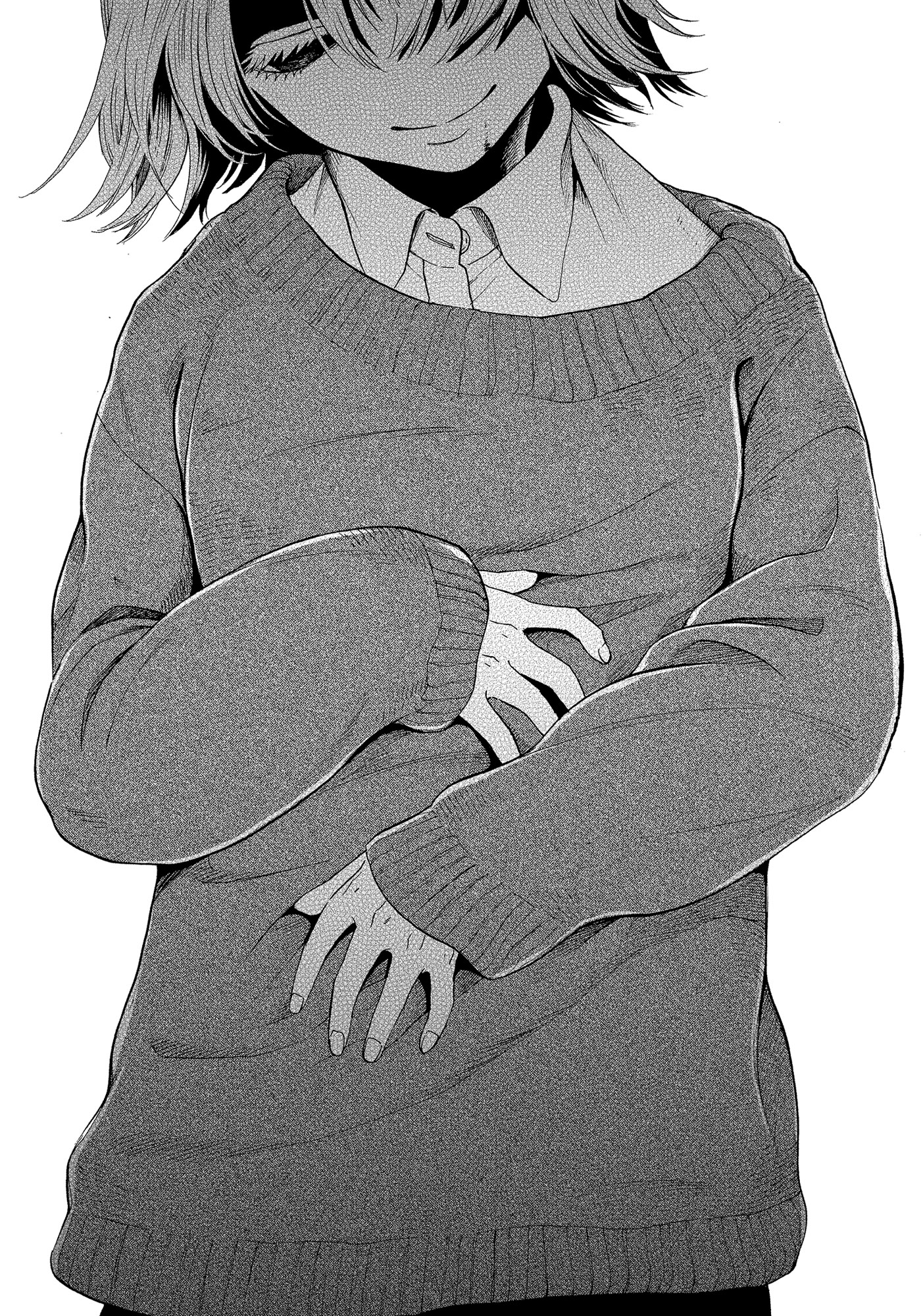
Agnella’s Song
Suzuki Ootsuki
Old memories stir within me.
I remember the heat. Warmth. Joules. Life’s pulse, fluttering beneath the bones and flesh and blood and skin that shaped it. But in time, that life would follow the second law of thermodynamics—everything breaks down—and grow cold and motionless. So I did what I could to prevent it. Calming, binding, embracing, hugging, wrapping, adoring, and when all else failed—dissolving. Occlusion. Unification. Mating. Melding. Mixing. Melting together. Forming one thing: heat.
Oh. How warm…
***
There are children in this world whose mothers sing them lullabies, whose fathers read them bedtime stories. Children who know neither hunger nor thirst, who count sheep and fall fast asleep on a comfortable bed with no rusty springs. Children whose sheets are warm, and free of mold, and don’t stink of the old man who used them last.
I grew up with none of that. To me, these sound like stories, like dreams, the stuff of imagination. Children sniffling, their backs hurting, their bellies empty; that was real to me. The furious creaking of misshapen box springs served as my childhood lullaby. In place of sheep, I counted the scabbed, itching wounds on my back as they healed. I owned nothing but my pain and the fact that I’d survived another day. My knees pulled up to my chest, I would curl into a ball on my side. This sleeping method was the first thing children learned in the orphanage.
I was eleven years old.
I was born on a stormy night, a few days before Christmas, in a poor farmer’s rundown barn. The wind bled through the walls. Unlike another child born on Christmas, the three wise men didn’t appear by my pillow. Indeed, I received no blessings at all; I was born and abandoned like a stray dog.
Normally, that’s where my story would end. A newborn infant hardly has the stamina to survive England’s harsh winter. If only my life had ended there, parentless, quickly growing cold. The light of my life would have been snuffed out before morning, and I would have slept until the trumpets called forth the rapture.
But it didn’t end there. The farmer found me. This farmer—the man who later adopted me—told me this story at every opportunity. He’d seen a strange green light through the barn windows and realized something must be wrong. In his mind, the Lord guided him to me, appealing to the goodness in his own soul. But when they investigated later, they saw no signs of any light or fire—it was believed my mother or parents had gone about having me in the dark, intending to abandon me. In other words, the spirits he’d imbibed that day had made him see things, according to my adoptive mother’s more rational analysis.
Either way, my adoptive parents took me in, and my life was spared.
Naturally, this decision hardly came from the goodness of their hearts. They had four children of their own and a grandmother who lived with them. My food didn’t cost much, and the experienced old woman and the family’s youngest daughter cared for me. If I grew up to be useful, that was good; if I became a jewel they could sell off, even better. If somehow my relatives emerged and offered a reward for my safe return, my adoptive parents would be both rich and renowned for their mercy. For poor people, orphans can be a worthwhile investment.
They named me Agnella—Purity.
They gave me the name of their fifth child, a victim of cot death some six months earlier, reusing it to avoid the trouble of thinking up a new one. Fortune has never truly smiled on me, but in that way I was lucky. Having baby wraps and diapers on hand probably factored into their decision to adopt me. Whatever its origins, I genuinely like the feel of my name. Agnella. Most people simply address me as “hey” or “you,” my adoptive parents included, but this name is the one thing that’s mine alone.
I lived with that family until I was nine. On good days I received two meals. I worked from the time the sun rose until it set. My bedroom was a drafty corner of the barn, otherwise occupied by a scrawny bull named Brown and a pair of garbage-eating mountain goats named Gray and White. This was the same barn where I’d been born. I had no reason to complain. I slept on the straw with the flies in summer and huddled up against Brown, Gray, or White for warmth in winter. I spent many moonlit nights singing myself to sleep, the animals my only audience. I worked as I was ordered, without thought or complaint. They beat me sometimes, but I didn’t object to this treatment. I had no concept of right and wrong. I knew no other world. The barn, the fields, the forest and rivers, the little village we sometimes visited, the bull and goats, my adoptive parents and family—that was the only world I knew.
But two years ago, I abruptly lost that world. It began with Brown’s death.
One winter morning I woke shivering in the cold. The moment I opened my eyes, the bull let out a long sigh and closed his. I shook him, calling his name. He looked at me one last time, then glanced toward the window and closed his eyes again.
I stayed by his side until his heart stopped for good, and all traces of his warmth vanished from the world.
The bull’s loss was a fatal problem for my adoptive family: He’d towed their plow. For a while they unsuccessfully tried this and that to gain the funds needed to buy another bull. Then, one morning, they called me by name, a rare occurrence. They said I wouldn’t need to work that day, that I should bathe in the river before noon and change into my cleanest clothes. I did as I was told. When I returned, they handed me over to a visitor I’d never seen before. There was no time to say goodbye.
My adoptive parents had simply sold what they owned, earning the return on their investment. Meanwhile, I was put into a car and driven east.
They’d sold me to a place named Arkham Home, a small orphanage near the town of Norwich in Norfolk.
***
Arkham Home was an old convent repurposed as an orphanage, a gloomy prison whose sturdiness was its sole virtue. The building boasted high ceilings and imposing walls that shuttered the place in twilight at all times of day. At night, ominous shadows gave shape to the darkness. In summer, the air was moist; in winter, a merciless cold chilled us to our bones. The place was a fortress, and according to rumor it had been an internment camp at one point. The rumors were likely true; with a cliff behind the building and a surrounding ditch making it impregnable, escape and infiltration were both difficult.
A small well inside the compound provided more than enough water to sustain the place. That meant the orphanage had very little actual plumbing. Our lives were extremely dependent on the water we could pump up from that well. The well water was heavy, cold, and so hard that it made soap lather poorly. According to Sister Abigail Williams, the orphanage’s manager and dorm mother, all of these things were “trials from God.” Therefore, there could be no improvements or alterations of any kind.
Twice a day, at dawn and dusk, the younger children pumped the water we needed. The water was clear and freezing cold all year round. It destroyed the children’s fingers. It split their puffy red skin, removed their fingerprints, stiffened their joints so that they refused to bend. Kids often went to bed moistening their fingers with lips and tongue, warming them, enduring the itching and pain. But they lacked the skills to do anything more than work the field and look after livestock, under the supervision of the nuns and the older children. Those kids who had learned reading, writing, and math were given more complex tasks, sent to work “outside.” It was their job to bring money into the orphanage beyond charitable donations or financial aid.
My first year, I, too, was sent to pump water. Until we reached the quota for drinking, food prep, laundry, baths, and other uses, I would silently work the manual pump handle until the bucket was full. Then I would carry it, pour it out, pump it full, and carry it again. Once that was done, I had the rest of the day’s work to look forward to. Working the fields with cold-ravaged fingers was brutal even for me, who’d grown up on a farm. The brief period of classes before bed was no trouble; that involved sitting in a chair, doing nothing but listening to the instructor talk after all. I learned less out of interest and more from a desire to see how much I could retain. It took me only six months to master the basics of reading, writing, and arithmetic. As a reward, I was given work that required my newfound skills and freed from the terrors of the pump.
The children’s literacy rate wasn’t very high. The orphanage was structured so that the better you were at reading, writing, and math, the more opportunities you had to enter the outside world. Because of that, the number of properly educated children never went above a certain threshold. Naturally, an orphanage wasn’t a place of permanent residence. Once we became too old, we were told we were “independent” and shipped out before they’d arranged proper homes for us. Talented and attractive kids would, of course, be adopted in the end, while those of us who were neither would be left to languish. Apparently, the orphanage had purchased me to maintain a certain head count to qualify for government funding.
Sister Abigail insisted that suffering wasn’t a punishment, and the righteous path would bring us closer to God. This was the orphanage’s primary creed. As an approach to life there are worse mantras, but it provided no comfort whatsoever for orphaned children. Sister Abigail seemed convinced that these trials polished our souls and would lead us to the gates of heaven. But these weren’t trials from God; rather, they were trials she’d invented. We needed something akin to warmth, something that would help us to endure and overcome life’s hardships.
Instead of warmth, we got Julian. Julian was a saint who had lived here in Norwich, fond of a whip commonly known as the cat o’ nine tails. Sister Abigail called it a “tool of learning,” but each of the nine leather straps ended in a hard nub that could easily break the skin when applied with enough rigor. For example, when eight-year-old Cathy spilled her milk at the breakfast table, she was given one whack. When six-year-old Georgie wet the bed, he was given one whack. Yolanda, thirteen, made a mistake at work and received a particularly strong whack. Use dirty words, one whack. Take the name of the Lord in vain, one whack. At night, unable to sleep from the cold and the pain on their backs, Georgie and Cathy crawled into my bed where I held them, their warmth reminding me of life in the barn. I sang softly to comfort them. We could find no blessings in Julian’s trials.
Life in the orphanage was simple and hard, likely not all that different from the lives of the nuns who’d once lived here. We rose before five. The older children went to work in town, delivering newspapers and milk. The younger children fed and cleaned up after the livestock and pumped water, and we all gathered for breakfast at seven. After breakfast came prayers. Then we’d do laundry and care for the chickens and cows we kept while the older kids went to work in town. After lunch, we had the occasional lessons. At six, everyone returned home for the evening meal. Then came more prayers, lessons, and a very small amount of free time before bed at nine o’clock. At five the next morning, the same routine began anew, over and over and over again. Only the seasons provided any variety.
For example, spring. Norwich springs didn’t last long. The weather was fickle and could change in an instant. A pleasant morning would give way to heavy clouds and rain in the afternoon. The rains were light, but often accompanied by strong winds, making coats and hoods necessary. By evening, the winds would have blown the rain clouds away, and the blue skies would return. The children waited for this, making the most of the sun and the dry air. April and May usually passed with a chill. Throughout the year, the rain fell two weeks out of every month. Living in this land meant living with the rains.
By early summer the days were longer, and by June the skies stayed bright until after our bedtimes. The children fell asleep a little later than usual, spending the extra time lying in bed, talking about their harmless little dreams and desires.
Each room had two bunk beds. The crybaby Georgie lived above my bunk. He always talked about how someday his parents would find him, pick him up, and take him away to live with them where he could eat all the good food he wanted. The lower bunk opposite mine belonged to the dreamer Cathy, who always talked about how God would send her a good man, make her a “lady,” and she’d have lots of children and live happily ever after. Determined Yolanda slept on the top bunk and always talked about getting out of this prison, surviving in the world on her own skills, enjoying a life of freedom filled with nothing but what she wanted.
By mid-July it got properly warm, and the dark gray sky gave way to sunshine and balmy breezes. When the temperatures rose, the boys took their shirts off and spent the afternoons half-naked. Within the orphanage walls, the girls were permitted to bask in the sunlight wearing rather bulky chemises. This was a rare opportunity for extra vitamin D, the lack of which greatly increased the rate of illness, so the sister was reluctantly forced to turn a blind eye. To the children, these skimpier clothes were also a means of protection. Even Sister Abigail realized letting outsiders see Julian’s marks may not be the best idea. This time of year, Julian rarely appeared, and far fewer children went to bed crying.
But it didn’t stay that warm for long. Once September arrived, the temperature dropped, the clouds returned, and so did the rain and chill. October passed, and strong wind warnings frequently came on the radio. There’s a poem in Mother Goose that goes, “The north wind comes with November/See how the leaves do flit/The snow storms come with December/Make sure the fires are lit.” Once autumn was done, we entered the hardest season: winter.
But even then, I looked forward to one thing.
Not my birthday, of course, nor Christmas. Sure, we’d get a scrawny turkey for dinner and a roast of bitter Brussels sprouts, along with a Christmas pudding that wasn’t nearly sweet or nutty enough—different from our usual fare but hardly worth celebrating. The Christmas presents were simple toys and stuffed animals gathered from donations or hand-me-down winter clothes. I never looked forward to New Year’s Eve either. We got to stay up late and watch the fireworks near Big Ben and the live broadcast of Hogmanay in Edinburgh. While we looked forward to that, we weren’t even given pretzels to snack on.
No, it was none of those things.
In winter, I looked forward to the funfair.
A normally deserted area on the fringes of town became an enchanted landscape filled with sparkling lights, games, and stands. Crowds came to visit the day and night before the fair. Tons of massive trailers rolled in from God knows where. Engineers and craftsmen scurried this way and that, and somehow got everything set up in a single day. A small Ferris wheel appeared, making a brilliantly lit circle in the air, and a little double-decker bus honked its horn. Teenage boys boasting about their strength swung a hammer, trying to ring the bell atop a giant pillar. There was a balloon clown so large that kids could climb inside, though it terrified the younger children. The smells of buttered popcorn filled the streets of the town.
For the four days of the fair, the orphanage children were allowed to walk around in groups of five selling “Orphan Biscuits” (instead of Girl Guide Biscuits). Of course, the official name was Arkham Homemade Charity Biscuits, but we kids never called them that. Christmas was a good time to encourage benevolence and charity, so the board of health permitted us to set up a small stall at the fair. The mayor and councilmen would show up and sample a biscuit, buy a few boxes, and get their pictures taken for the paper, so the sister always put vast amounts of work into that booth. She would thoroughly check our clothes and hygiene to make certain we didn’t look too shabby (which might attract attention from kindly grown-ups and child welfare officers). Then we were sent to the fair, where we wandered around selling biscuits until the evening, while another group of children stayed at home and made more biscuits all day long.
The mood and booze got to some people. Spiteful drunks sometimes came after us, and seeing people with their families, lovers, and friends forced us to compare our own circumstances, which could be brutally hard. But if you could get past all that, there was fun to be had.
On the last day of the fair, the city gave us each a single sheet with ten tokens on it, and the orphanage would give us about ten pounds spending money.
Tokens were tickets used for the attractions. Stuff like the trampoline or balloon clown cost a single token; most rides were two, and the main-event attractions like the roller coaster could go as high as four. In other words, you could carelessly burn through your ten tokens very fast. The money, as well, was only enough to buy two or three things at the stands, but this was our sole opportunity to spend as we liked. We had more freedom during the festival than the whole rest of the year.
I’d arrived at the orphanage the previous winter, and had used money for the first time in my life at the funfair. In the beginning, I wasn’t at all sure what to do with it. I’d wandered around aimlessly, watching people. Children happily munched popcorn. Children screamed on the roller coaster. Children ate frankfurters with the intensity of a philosophical conundrum. Children used real coins to try knocking over pins in an attempt to score a ten-pound note.
At last I found the paint booth and went inside.
While selling biscuits, I’d seen people walking around with their faces painted. Soccer balls or colorful fruit, Union Jacks, cute animals and angels covered their cheeks or shoulders. Some people wore full-face makeup like it was Halloween. Like the nail art and costume booths, the face paint got people into the festival mood. I felt like I should do something along those lines. I needed to get used to all this. With that in mind, I went up to the register. A girl with a long-horned goat painted on her cheek smiled at me and asked what I wanted.
Full or half-face paint cost a pretty penny and seemed like a bit much. It was all I could do to ask for the cheapest and smallest. She put a little foundation on my left cheek, the first makeup I’d ever worn. She added a bonus one on my right cheek, then a little blush. Her brush danced, quickly filling out the thing I’d asked for: Agnella, my name, with a brown bull lying on top of it. When she showed me in the mirror, my heart beat wildly. The blood rushed to my face, and it felt like it was on fire. She laughed, saying most people just ask for cats or dogs. But, hey, she had a goat herself.
Then I went and used my first tokens. I remember looking at the ticket collector’s hand and trembling, afraid he’d get suspicious and arrest me. I remember how beautiful the view looked from the—rather small—Ferris wheel. I remember the night sky, our orphanage tiny in the distance.
What should I do this year? Should I take Cathy and Georgie, and all go around together? As I wandered about selling biscuits, I considered.
The sun began setting on the last day of the fair.
I looked up at the Ferris wheel, bright against the darkening sky. I looked around at the target range, the balloon shop, the toffee apple shop, the coffee cup ride, the go-kart track—which the boys would certainly love. A merry-go-round stood in the center of the fair, and people of all ages were riding the horses. The music and lights were so intense that they seemed to force back the night. Families and groups of friends packed the fairgrounds. Smiles flashed all around, and the other orphans were already eager to join the fun.
It was almost time. Our squad leader, Kay—at sixteen, the oldest girl in the orphanage—checked the sales with practiced ease and announced our return to the booth to cries of delight. Once Sister Abigail had checked our numbers, she would officially declare the “Annual Funfair Arkham Homemade Charity Biscuit Fundraising Drive” over. Then, finally, she’d begin handing out the token sheets and ten-pound notes that would allow us to experience two hours of absolute freedom. Our sales for the day hadn’t been bad, and it seemed the other squads were in similar shape. If we’d done well, we’d finish with the sister in a good mood, and when we went back to our normal lives tomorrow there’d be peace for a while. Our feet were light as we headed back to the meeting spot.
But when we arrived at the orphanage’s booth, the mood was ominous. The other groups looked tense and stood in silence, almost like they wanted to blend into the scenery. The children in my squad stopped in their tracks. I alone moved forward because I recognized the crying voice coming from the center.
Georgie knelt on the ground, bawling his eyes out. Sister Abigail and the other nuns stood before him. The group of children with bowed heads had to be his squad. I couldn’t very well pretend this had nothing to do with me and stood nearby.
I saw a familiar face in the group and ran over to her.
“Yolanda!” I cried.
“Oh, Agnella.”
Yolanda held Cathy, who was silently crying. She looked tense.
“What happened?”
“Agnella! Georgie, he…” Cathy said, looking up. She grabbed me and buried her head against my chest. Her little body was warm against mine.
Yolanda shrugged and shook her head. “Georgie tried swiping some of the sales money from the Orphan biscuits to buy some cotton candy.”
“What? But…”
Theft was, of course, absolutely forbidden, and there was no way it was even possible. Each squad calculated their own profits competitively, and the units sold were tracked on a computer only the nuns could use. If we were even one penny under we’d be strictly scolded to the point where nobody wanted to be the one holding the cash.
“Yeah, of course he got caught. But he’s a new boy and didn’t know better, so he got stuck holding the change.”
She jerked her head at the squad behind Georgie.
“The impulse got the better of him. He’s in for three full swings of Julian for sure. Gonna be sleeping on his stomach for a while, and he’s gonna be the only one with no tokens or money tonight.”
“Oh no!”
Georgie was a crybaby. This was the first fair since he’d come to the home, and he’d been excited about it for days, barely able to contain himself. I never thought it would turn out like this.
“Really, if you’re going to do it, make sure you don’t get caught. Or just wait a little longer and buy it with your own money! They found him before he even took a bite of the cotton candy, and the whole thing ended up in the mud.”
Yolanda was clearly very upset.
“And we’re forbidden from buying anything for him. Unfortunately, some very important people noticed what was happening, and the sisters are all furious.”
“If only you or I had been with him…”
“Yeah, but the sisters chose the squads.”
“Poor Georgie,” Cathy said, her voice choked up. “I promised him we’d eat some sweet Yorkshire pudding with loads of whipped cream together…”
Cathy was much younger than us, but she’d lived at the orphanage for three years, longer than anyone else. She knew exactly what life here meant.
Yolanda and I looked at each other. We both knew Georgie’s parents had abandoned him when he was two. He believed he’d just gotten lost and that they were out there looking for him. Apparently, they’d abandoned him at a festival, and he’d gotten separated from them in line to buy some fluffy pink cotton candy. His parents had stuffed some coins in his hands and told him to buy some, and the money hadn’t been enough.
“Agnella, you think it was the funfair?” Georgie had asked.
“Think what was?”
“The festival where my parents lost me. I don’t remember. But if it was, then this isn’t my first time!”
We knew exactly why little Georgie had been so excited and nervous the last few days.
“I’ll tell the sisters.”
“Agnella?” Cathy said.
“Tell them what?” Yolanda sighed. “Even if you do, this is still his fault. He brought it on himself.”
“Yeah, but…”
I saw a flash of green light. Translucent emerald light, with something sticky and red melting inside of it. My head hurt.
What could it be?
My heart beat so fast my chest ached.
My body moved without thinking. I hated to let go of Cathy’s warmth, but I peeled her off me. Cathy reached out, but Yolanda was faster. She threw her arms around me.
“Don’t blame me for what happens,” she said.
“Yeah. You two try to enjoy the fair.”
“Agnella?!” Cathy yelled after me, but I turned on my heel.
My head throbbed. Something moved at the edge of my vision.
I turned my head to look; there was nothing there. My imagination? But then I thought I saw something moving in the other direction. I quickly turned to look again. The world wobbled. Cathy watched me anxiously, and Yolanda frowned. I saw nothing else. The attractions’ bright lights left trails across my vision. Maybe that was what I’d seen.
I felt a little better. I turned and walked up between Georgie and the sisters. I felt like the more I moved my head, the less it hurt.
“Agnella?” Georgie said. My shaking head seemed to concern him.
“Sister,” I said.
“What?” Sister Abigail said, glaring at me. “We haven’t closed yet. Wait until then.”
“No, that’s not it. I want to ask you to forgive Georgie,” I said.
She narrowed her eyes.
“He committed a sin. He must be punished for it.”
“His punishment…” My head throbbed.
Brown, the bull. The goat on her cheek. The Ferris wheel. Tokens. The winter barn. Snow falling, frozen ground. Memories of being taken from my adoptive parents’ house flooded over me, but I didn’t care. The hint of fear in my adoptive parents’ eyes. I didn’t care about them or the children hiding behind them. I cared about the two goats, Gray and White. Had I said my proper goodbyes to them? And what had happened to Brown’s body? Normally a Jersey male would be slaughtered for food shortly after he was born. Brown had likely died from old age and the cold. I’d felt the warmth leave his body as I stared up at the open roof hatch. And the green light there…
Green light? Why did I picture that? My head hurt so much, I shook it. I shook it a lot.
Georgie looked more concerned. My brain trembled. Sister appeared worried, too.
“The punishment, I’ll… Put it all on me. Y-you can… All of it. I… B-Brown’s…”
“Brown?” she said.
“Brown’s grave… I.”
I hadn’t dug one.
“What are you saying? Who is Brown? Agnella. We’re talking about Georgie’s punishment.”
“The sin… It’s all m-mine.”
My tongue wasn’t moving right. It was so hard to get words out.
I could smell maple syrup from the pudding stall Cathy had mentioned.
And rot, also. The foul stench of a swamp.
“Gray and…White, too. That way…”
My thoughts splintered. I felt feverish. Fireworks exploded behind my eyelids. Headache. Shaking head.
I couldn’t hold it back.
“I can’t hold it back.”
My thoughts came tumbling out of my mouth.
It was so cold.
“So cold.”
I wanted…
“I want…”
Warmth.
“Agnella? You seem confused. Very well,” Sister Abigail declared. “Whatever the reason, I understand you are willing to accept the punishment of your brethren. I accept this request. Very good. Julian of Norwich, the Saint of Sight, who beheld a vision of God’s will in this very land once said, ‘All shall be well.’ Therefore, I shall forgive Georgie’s sins. In exchange, I shall visit upon you three blows from Julian and revoke your rights to the tokens and special allowance. Until that time, you may rest over here.”
Given her absolute faith in trials, she was, ironically, very much in favor of taking on other people’s punishments. She viewed my strange behavior in a positive light.
At her word, two of the nuns stepped forward and grabbed my arms. Another nun opened the orphanage van’s sliding door.
“No, you can’t!” Georgie cried.
“Agnella!” Cathy sniffled, watching all of this from a distance.
“Idiot,” Yolanda hissed.
I saw everything. I heard everything. But…
I was…
***
Blood fell like rain. The heart was still beating.
The delightful squelching sound reached its crescendo, and the bones and flesh collapsed. The tendons and muscles and nerves and blood vessels came tumbling out of the body. Blood spread, darkening as it lost oxygen, cooling as its heat faded. The ground’s moisture formed needle ice, which absorbed the pool of blood and turned it a brilliant red. Crimson ice needles. Ah. Such a waste. I closed the wound while he screamed in pain. This wasn’t good. The sound might summon unexpected company. I reached both arms up and wrapped them around his neck, pulling his face close, sealing his lips with mine. I pushed inside to the back of his throat, all the way through the stomach and into the intestines. There, I savored the gurgling sound he made as he drowned and spent a pleasant time in his embrace.
I was…
***
I woke up. The van door was still open. They hadn’t yet shoved me inside.
Oddly, there was no one around. No customers, no one working the booths or attractions. Not even the nuns, or the other children, or Sister Abigail. Just rows of attractions and rides, music playing as if nothing were amiss. The lights brightened the night sky. I guess the funfair itself wasn’t over yet.
“Georgie? Yolanda? Cathy?”
No one answered.
Just in case, I called for Sister Abigail and the other nuns, too. No response. Everyone had vanished. What was going on?
“Ow…”
My headache was totally gone. I felt like a mist had lifted, clearing my thoughts. But I also felt a dull, heavy pain below my waist. Still, I wouldn’t get answers just standing around like this, so I started walking.
It was like walking through old photos of Coney Island, some foreign amusement park with more staff than customers. This was a desolate place; a very strange experience. I walked through the center of the fair, gazing up at the big, flashy merry-go-round. I passed the deserted chocolate banana stand and a punching machine. I ducked under a roof laden with magic 8-balls—presumably the winner’s prize—and walked on down the empty main road.
“Another merry-go-round?” I muttered.
Before I knew it, I was at the very back of the fairgrounds, where I discovered a smaller merry-go-round. Warm, orange bulbs covered this one, and an organ played a friendly song. The ride chugged along softly like a locomotive as it slowly turned. Of course, there were no riders. Ponies made up more than half the animals on the slowly turning stage, but I also saw baby elephants, a Pegasus, giraffes, and dragons. They all looked as if they were having a great time. Antikythera, Becky, Charlotte, David, Elizabeth; each of them had a name tag, displayed in alphabetical order. All of them looked old. They’d clearly been running around this platform for a long time. Their creaky movements certainly weren’t smooth, but they were well oiled, and their bodies appeared waxed and shiny. Someone had done a good job of maintaining them.
“Oh.”
As I stared, flickering, hazy green lights appeared atop the animals. The lights held the reins and danced around on the carved wooden saddles.
Boys? No, girls.
They frolicked and played among the ponies.
Their hair fluttered gracefully. Their long limbs, if human sized, would undoubtedly appear very beautiful. But their legs turned into birds’ feet at the knees, and colorfully-feathered wings sprouted from their shoulders. These wings were small however; it was hard to say how they’d ever get airborne. Their big, black eyes darted this way and that, teeming with curiosity. These girls were tiny, the largest of them barely a foot tall. They flitted and danced happily through the air.
What a rare sight, especially in town.
When had I first seen them? I’d first noticed them when I was very little and my adopted siblings took me into the forest. On the bank of a small pond, insects I’d never seen before swarmed through the air in spiral columns. But the other children ran right into the middle of that swarm, clearly unable to see them. That’s when it all began. I thought I’d imagined it, but the eldest girl, who’d kept her head in the swarm the longest, came down with a nasty fever after we got home. After that, I was sure there were things in this world that only I could see.
Humanoid creatures like these girls weren’t so bad.
Sometimes I’d see unfamiliar birds dart across the sky, or I’d glimpse an ungulate-like creature I could not identify. The easiest to see were swarms of insects, invisible except for their wings as they fluttered in the air. Or there were the black, mist-like patches that you couldn’t focus on no matter how hard you stared.
Sometimes I’d encounter things I instinctively knew to avoid, certain that if our eyes met just once I wouldn’t survive. I could smell the danger on them.
I mostly saw these creatures around old trees or hollows in the forest, near moss-covered rocks or springs, near faerie rings of mushrooms. So it wasn’t all that difficult to act with caution and avoid them.
But honestly, I only knew they existed. I’d never communicated with them at all. They seemed wary of me, so if I ignored them, they wouldn’t approach.
“What are they though?” I muttered aloud.
“Them? They’re Gallopers.”
That surprising answer came from a hoarse, alcohol-roughened voice.
“Who?!”
I jumped and turned around. In the merry-go-round’s shadows, I saw a little hut. The word “Fortunes” was written in brilliant bulbs on the roof. People in a festive mood and ripe with a little booze would enter that hut hoping to speak with some magical thing—a god, Tarot, or a crystal ball. Such people wanted some guarantee of future happiness, a fortune teller’s bread and butter.
I moved closer.
In the shadow of the entrance, an old woman sat behind an oddly-shaped, three-legged table. She wore Romani clothes, presenting the classic picture of a fortune teller, but I couldn’t tell if she was a real Romani. I was only certain she was very old. An elaborately decorated Easter egg stood upright on the messy desk before her. The egg wobbled but somehow maintained its balance.
“Open those eyes of yours, and you’ll soon understand. The wooden horses are all racing clockwise, yes? That’s how you know it’s a proper British Roundabout.”
The woman seemed disinclined to identify herself. Well, she was right about this much; these horses definitely ran clockwise. The horses nearest me all faced left.
“An American Carousel will have them running counter. I’m sure you saw that one in the central clearing, all those Yankee horses that don’t know what it is to be tired.”
The old woman waved a hand dismissively.
“Their proper name is Gallopers. They’re steam-powered, the old-fashioned way, slower than you could walk. Old-timers. They’re verging on a hundred, you know.”
She laughed. Honestly, at first I’d assumed “Gallopers” was a name for the tiny girls.
“So,” she said, after a dramatic pause. “The little green ones flitting all about them? Those are good neighbors.”
My jaw dropped, and I let out a strange little squeak.
“You can see them, right?” she said.
I wasn’t sure what to say. While I gaped at her, she looked closely at my face. Her eyes were different colors and seemed to see right through me. From the way she moved, I could tell she was nearly blind.
“Hmm. I wondered why… That explains it,” she muttered to herself.
“Wait, wh-what do you mean, ‘good neighbors’?” I asked.
“Oh, you don’t know?” she smiled. “Never heard of them in your bedtime stories?”
I shook my head.
“I…don’t have any parents, so…no stories.”
“Parents? Hmm. I see. Well, there you have it.” She nodded, not at all sorry.
“Um…”
“Right. If you want to ask, sit yourself down.”
She pointed to an empty chair. I sat down. Woven cane covered the seat and felt strange beneath me. It seemed light enough for easy transport, handy for Romani. It was oddly shaped but embraced my hips comfortably.
“So, about them.”
I glanced back at the Roundabout, at the girls playing around the ride.
“Like I said. They’re the true friends, the good folk, the Daoine Sídhe, the wee folk. They live in the forests and at the bottom of ponds, in the soil and mud, in the shadows of rocks, and sometimes in the hawthorn trees. We call them neighbors. You may know them better as faeries or spirits.”
She reached into her pocket and pulled out a well-worn deck of Tarot cards. She shuffled and began laying them out on the table with unsteady hands.
“Specifically, those ones are Ariel. You might know them from Shakespeare’s The Tempest.”
I didn’t, but I know what she was trying to tell me. They were the wind. They had wings and antennae, like insects.
“So they are faeries,” I said. I’d wondered if they might be, but I’d never told anyone I could see them and never met anyone else who could. That word had long stayed buried within me.
The old woman snorted. “The neighbors are all quite whimsical, the Ariel included. They often snatch away children or brides, tear up fields, and cause all sorts of damage. Don’t ever call them by their true name—it’s too dangerous. That’s why we have so many other names for them.”
“Oh.”
“Everything started with a word: ‘Let there be light.’ A name grants one control over something, outside and in. Speaking of which, what’s your name?”
“Oh. Agnella.”
“Hope? Hmm, good name for a fatherless child. Let’s see,” she said and flipped one of the cards on the table.
The card displayed a beautiful, naked woman with a vase in each hand, pouring water onto the earth. Water from one vase formed a lake, while the other caused buds to rise from the ground. One giant star winked in the sky, and seven smaller stars clustered around it. It appeared to be early morning. On a branch in the background, a bird announced the dawn.
“Star,” the old woman whispered. She reached out and turned another card—I wasn’t sure if this was at random or following a specific sequence.
This time, the card showed an old, bearded man in a robe. He held a lantern in his right hand and a staff in his left. He appeared to be standing on some mountain precipice. He looked down upon a sea of clouds, nothing but empty space around him. There was something unworldly about his eyes as he gazed below.
“Hermit.”
Her brows twitched when she turned the card. Was that not good? For too long I’d nervously watched people’s faces, and now I picked up on the slightest changes in expression.
“Well, what next?”
She turned over another card.
“What?” I whispered the moment I saw the picture.
The words weren’t English, so I couldn’t read them, but the message was clear. Bad omens crowded the picture.
“The Tower,” she said, her voice low.
Against a star-filled sky, a tower was being destroyed. Lightning struck the tower’s summit and it collapsed, consumed by flames. In the air, I saw a golden crown, shooting flames, the lightning, stone fragments, and two men who screamed as they fell to the earth.
“Choose the last card yourself,” the old woman said, looking up at me.
“But…”
“Doesn’t matter which. These cards are older than me or that Roundabout, so treat them gently.”
“S-sure.”
I looked over the cards, around twenty in all. Three of them had already been turned face up.
They looked at me, and I looked at them. Which should I choose?
Then… Though it wasn’t that unnatural for a winter’s night, I felt a chill.
I reached out a hand, my fingers so numb I could scarcely move them.
The cold.
I knew this sensation; knew it well.
Inside my head, my guts, something was oozing. The core of me was somewhere warm, protected. My toes and fingers felt frozen, the cold slowly creeping up my arms and legs, leeching away my warmth.
“Oh.” The old woman gasped.
I started, as if waking up from a trance.
Shaking my head, I looked down to find four cards face up.
“Did I turn that?” I asked.
“Yes.” She nodded, her half-blind eyes staring at the card.
The card showed a man seated behind a three-legged table laden with cups, knives, and dice. A single leaf sprouted beneath his feet. His hair was curled and golden, and he wore a giant Bicorne hat twisted into the shape of the infinity symbol. He held a short stick in his left hand and a coin in his right. His brightly colored tunic was asymmetrical, and he wore pointy leather shoes over his tight leggings. He looked like…
“A clown?”
“No,” the old woman said—I realized that her table exactly resembled the one in the card. “Although some would say there’s little difference. He’s the Magician, a card that shows the power you have.”
“Power? You mean this weird—”
She shook her head.
“Nothing weird about it. Snakes see heat. Whales see sound. Wolves see scents. You see neighbors. Not everyone has a talent like yours. That’s all.”
“But—”
“Or perhaps anyone can see them under the right circumstances. The power itself is nothing special, just a power. A power any potential mage or alchemist has.”
“A mage?”
I’d heard about them. There were few left, but real mages existed. Some were strong enough that the church couldn’t just ignore them, but the authorities claimed the existence of mages helped proved that God was real.
“Agnella.”
At my name, I startled. The old woman’s eyes fixed directly on mine.
“I’m going to ask something strange, but can you answer?”
“Okay.”
She hesitated, then said, “Are you happy now? Or the opposite?”
“Huh?”
Good question. Was I happy, or was I unhappy? When I’d lived with my adoptive parents I never would have even understood the question, but I may have a better idea now.
There was a story that went like this: A city mule met a country mule by the side of the road. The country mule carried a heavy burden on his back. His shoes were worn-out, so he walked very slowly. But the city mule’s load was light, and he walked with a prance in every step.
The city mule said, “Oh, what a poor, unfortunate mule you are! Such a heavy load! You’re doing such hard labor.”
But the country mule just asked, “What’s labor?”
I was now conscious of both fortune and misfortune, and I knew I wasn’t fortunate. But at the same time, I’d never experienced good fortune. Did that make me unhappy? Or happy?
“Then what do you want, Agnella? We all said what we wanted.” Yolanda had been lying on the top bunk opposite me, head propped up on her elbow.
We’d often chatted until we fell asleep. That day, I’d had nothing to say. Unlike the other three, I didn’t have a dream.
“I don’t know,” I replied, gazing at the old woman.
“I see. If you could understand that, then…I wondered if maybe something like you could actually understand humans.”
The old woman shook her head, gathering up the cards from the table.
“That’s why you ate them? The dreams. Ate them whole. But you still didn’t understand?”
Dreams. Like she’d read my mind.
“Huh?!”
What did she mean? What was she saying? Why was she saying that? Wasn’t she just telling my fortune? My heart ached. A terrible pain started in my lower belly.
“Um, how much… I’m sorry, I don’t have any money. So. Could you give me a good fortune?” But I had nothing with which to pay.
“There’s nothing good or bad about it. I’m just here to check the milk that’s been spilled,” she said, sighing.
“Milk?”
“Like karma. Can’t get ahead of it to stop it. Can only see the result. Spilled milk can’t go back in the jug, but I always believe there may have been a better way for it to spill.”
She sighed louder.
“Listen close, Agnella. You’re a changeling.”
“A…changeling?”
“Faeries snatch human children away sometimes. Sometimes they take and dote on the children, other times they work the children hard. Sometimes they eat the children, but sometimes they even fall in love. If they just snatched the children, then that would be the end of it. But sometimes they leave a faerie or troll child behind instead. Those are changelings.”
“Then I’m…”
I remembered my adoptive father’s oft-told story, about the green light in the barn hatch. Emerald. Something everyone could see under the right circumstances…
Everything wrong in my life suddenly made sense.
What irony was this? The real me had been abandoned by her parents the moment she was born. Yet they’d wanted her, and to cover for it they left me behind…
Oh. Head to toe, start to finish, I was…
“I’m not…human?”
“Far from it.”
She put the last Tarot card back in the deck and moved to the desk in the corner. She picked up the Easter egg and gave it a little shake.
“For most changelings, this egg alone can start them over. But it seems you’re a more troubling type.”
“I don’t understand.”
“The goats. What happened to Gray and White? Did you say goodbye?” she asked.
“What?”
“The bull. What happened to Brown’s body? Did you dig a grave for him?”
“Uhh… I…”
“Why did your adoptive mother and father fear you? Why would they spend all that time raising you to the point where you could finally work, yet sell you away to an orphanage for a pittance right after losing Brown?”
“I… I was… I… Gray…and White…”
“Like I said, the milk’s already spilled.”
She put her elbows on the table, steepling her fingers.
“When did it first spill? A long time ago, when Brown died and his body vanished. And shortly after that, when both goats disappeared. Perhaps when you ate Agnella and became her. You are the one who snatched her away and at the same time the one who was snatched away. And…”
“Ah,” I whispered.
“You were never a faerie.”
***
Plop.
At last, Brown’s head melted and fell off. Oh well. Outside, I held him in my arms; inside, I flowed through him, melting him. I carefully picked up the head and this time hugged all of it to me, piercing the skull, tearing through the membrane, melting into the soft, grayish brain. Maybe I melted too much. I temporarily increased my volume and came spilling out his eye sockets, mouth, nostrils, and ear holes.
His heart had stopped beating. Green light surrounded the faeries in the barn hatch, who watched me with interest.
At last all the warmth was gone, fragments of his body and the bloodstain all that remained. I wiped some of it up, thinking if I dug a hole I could maybe hide some more; but not all. There was no way to avoid questions entirely.
Oh well. At least I’d been able to savor all his warmth before his weakening heart had stopped.
Gray and White huddled together in the corner, frightened and bleating. Oh, some day I would have to say goodbye to them as well. I’d lose their warmth, too. If that happened, what would I do?
***
Oh. I was…something else entirely.
***
When I woke up, I saw hell.
A sea of blood and guts lay before me. The Ferris wheel, the moon, the smell on the wind, and my own rotten scent blended in harmony, all combining to make this place look like the lid to hell had blown off.
Funfair customers sobbed, as did the orphanage children. Yolanda pulled Cathy away. Poor things. Poor, poor things. My heart ached. I thought it strange I had a heart that could ache.
“If you could understand that, then…” I muttered.
Perhaps these emotions were the answer that old woman had been after. In which case, perhaps I might have had a slightly different future. I wasn’t sure. It was too late now. Forget milk; I’d spilled deep crimson that sprayed all around, filling my insides.
The air smelled of smoke and cold. A heavy fog covered us, like this was London.
I looked around. I saw half of Sister Abigail’s face lying in the mud next to Julian. Her eyes, wide open, glared uselessly into the air. More pieces of her had been scattered far and wide, mauled beyond recognition. The other nuns had met the same fate, along with some of the children. The pieces were mixed together, all half-melted. Cold. But they didn’t fill me. They couldn’t fill me. They could never warm me.
“Georgie.”
I tried whispering his name but wasn’t sure I’d made a sound at all. I could feel precious warmth moving in me, as if in answer.
Crybaby Georgie no longer had the power to struggle. He’d melted in my belly, dreaming of his Mum and Dad.
Who was that old woman anyway? My thoughts connected my dream to reality. Had it really been a dream? Probably not. That may have been a real mage, so that “dream” was probably second sight. I was no saint—I wasn’t even human—but I’d given those nuns a great revelation.
My throat rattled at the irony. Did I even have a throat anymore? Didn’t matter anyway. What mattered was that I was here. I was here. Now we were both Agnella, and that was good. I shook my head and sighed. Sticky drops rained upon the earth with a squelching sound.
It was cold. I needed warmth. I needed Cathy and Yolanda. With them and Georgie, that would make three. I needed them to fill me, warm the inside of me, occlude, unify, mate, meld, mix. Melt together. Become one. Then I would understand a little better, a little more than now. About humans. About something. Mmm. I was sure.
Then I sang a little song, leaving a sticky trail behind me as I slithered toward them.
The End