Afterword
Afterword
I always wanted to write a story someday that makes you feel like you’re hearing music.
I’d like to express my appreciation to those who granted me this opportunity to novelize the manga Your Lie in April. The original story is very beautiful and poignant and has a certain pain and sweetness and bitterness. I was really drawn to it.
Describing music in words is very challenging. Before I began, the editor-in-chief gave me a serious look and asked me:
“Music, tones—how do you intend to convey all that?”
I remember answering that abstract expressions based on imagery wouldn’t be enough and that I wanted to portray in as particular a manner as possible a character who understood music logically via language and numerical values.
I would include scenes that weren’t lyrical so that the lyricism would stand out.
Shaking off my anxiety over whether I have something to show for all my effort, I humbly present this book to you, dear readers.
I assume many of you have some experience learning how to play piano. I, too, took lessons when I was a child.
I’m one of those people who quit, bored with Czerny Exercises, because I needed to study for high school entrance exams. Let alone becoming a concert pro, I wasn’t aiming for a career as a pianist.
The only Beethoven that I can play is “Für Elise,” the only Mozart is the “Turkish March,” so forget Chopin—that’s my level.
For a while, I played anime songs and such for fun on weekends, but once I started getting busy with my first job, without even realizing it I stopped opening the lid of my piano.
On this occasion, after a long hiatus, I tried playing the upright piano at my parents’ house. Since they play and have it tuned annually, the instrument itself is still in active service.
I opened up the score to Bach’s “The Well-Tempered Clavier Book 1: 1,” famous as the piano accompaniment to Gounod’s “Ave Maria,” hoping that I could play something as simple as that on first sight. (The piece makes an appearance in this work.)
If only haltingly, I managed to, which was kind of satisfying. I was surprised that my fingers remembered.
I’ve written a lot of novelizations about characters facing all sorts of challenges, but most of the time, I lack any personal experience and need to use my imagination based on ongoing research.
This time was different. Perhaps because the little experience and knowledge that I do have was getting in my way, just tapping my PC keyboard didn’t lead to the best expressions. Obtaining and spreading out scores next to me, I had to tap the desk with my fingers. “Air piano” was what I required to proceed.
It was a strange experience for me. I’d been presumptuous enough to think that I could write novels in my head, so it was humbling.
Actually, the CD that Kaori shows off (?) in the epilogue owes to a real-life episode. I’d searched a long time online for a recording and finally procured one, but three days later, just like I wrote in this book, I found one in a bargain bin. At that moment, a certain teacher named Nozomu Itoshiki shouted “I’m in despair!” in my heart (lol).
When I checked, the year was different from the recording I already had, so of course I bought it.
For all of the pieces mentioned in the original manga or to be used in the anime, and also for any that I wanted to include in these stories, I ransacked my house for the CDs I’d collected when I was younger. (Before becoming a novelist, I’d been in a chorus group that often sang classical music, so I was a semi-serious classical fan at the time. For me, competitions meant chorus competitions). The ones I didn’t have, I bought, and I listened to all of the songs as I worked. In fact, I’d never written while listening to music before. I felt sort of renewed.
I really loved music. I do even now, deep down. Classical especially.
So I was hoping to one day tell a story that makes you feel like you’re hearing music.
But my interest shifted to storytelling itself, and that became my job. It became my whole life, to the point where I didn’t listen to music anymore.
Now I’m thinking I’d like to start listening to music again. I hope I can get going with the chorus, too!
Finally, I’d like to express my gratitude to everyone involved.
To Naoshi Arakawa-sensei, to the Monthly Shonen Magazine editorial department, to Miss Etsuko Oguchi, a piano teacher who handled the research and fact-checking, and to the editor in charge, and everyone else who devoted themselves to this publication—thank you so much for your guidance.
Most of all, I thank all of you from the bottom of my heart, dear readers, for picking up these stories.
Yui Tokiumi
while listening to Kreisler’s last recorded performance of “Love’s Sorrow,” from 1942
About the Authors
Before she became a novelist, author Yui Tokiumi worked at a museum where she was engaged in archaeological and ethnographic research. She is known for her adaptations of classical Japanese literature as well as of quality comics.
Creator Naoshi Arakawa won the 37th Kodansha Manga Award (Boys Division) for Your Lie in April only several years after making his debut. His latest offering features high school women’s soccer.

ATTACK ON TITAN IN NOVEL FORM!


ATTACK ON TITAN:
BEFORE THE FALL
The first of the franchise’s light novels, this prequel of prequels details the origins of the devices that humanity developed to take on the mysterious Titans.

ATTACK ON TITAN:
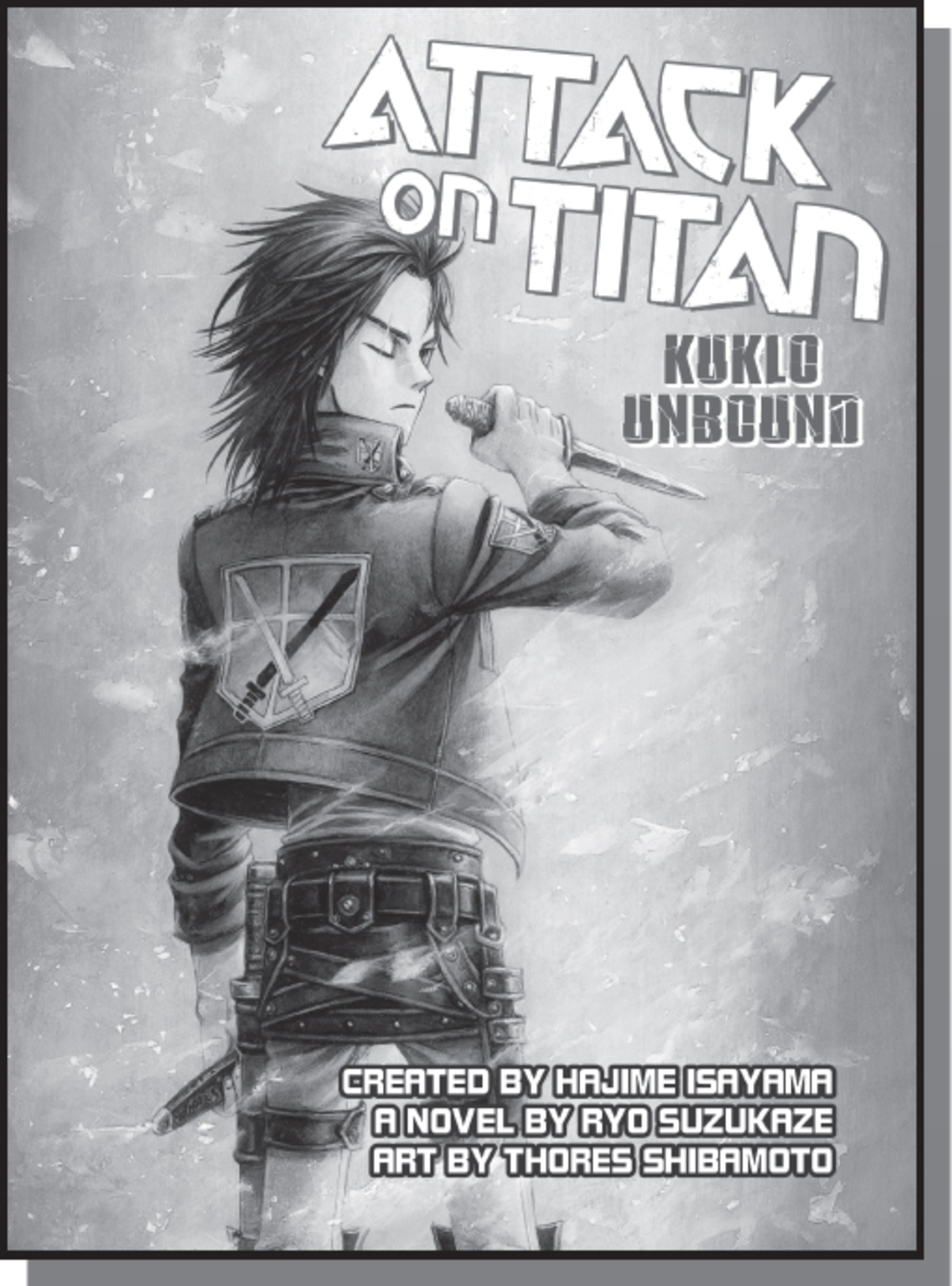
KUKLO UNBOUND
Swallowed and regurgitated as an infant by a Titan, an orphan seeks to find and prove himself in this official prequel novel to the smash hit comics series.

ATTACK ON TITAN:
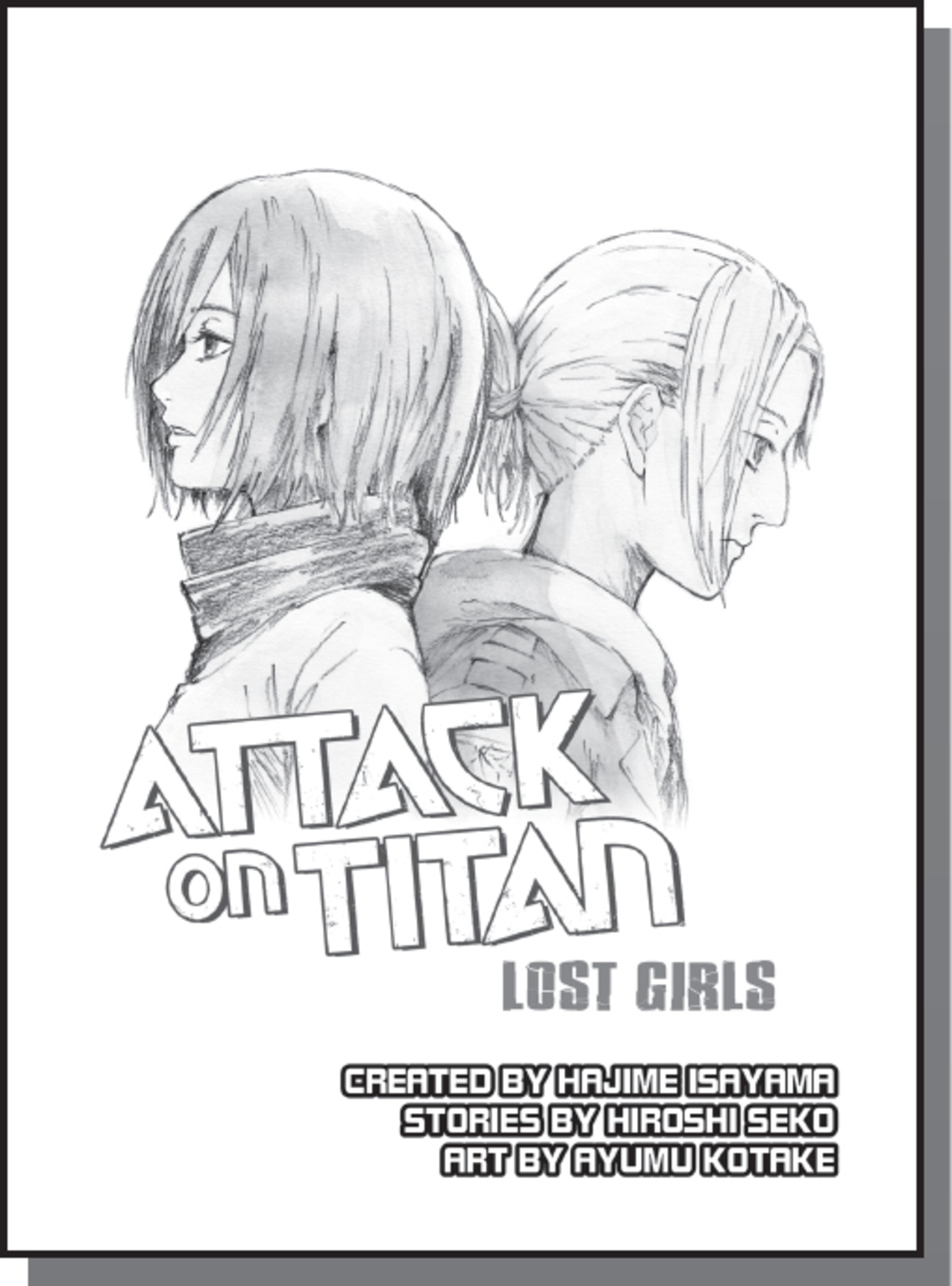
LOST GIRLS
LOST GIRLS tells of the times and spaces in between the plot points, through the eyes and ears of the saga’s toughest—but more taciturn—heroines.


ATTACK ON TITAN:
THE HARSH MISTRESS OF THE CITY Part 1
A stand-alone side story, Harsh Mistress tells of the increasingly harrowing travails of Rita Iglehaut, a Garrison soldier trapped outside the wall, and her well-to-do childhood friend Mathias Kramer.


ATTACK ON TITAN:
THE HARSH MISTRESS OF THE CITY Part 2
In this concluding half, Rita Iglehaut struggles to turn her isolated hometown into something of a city of its own. Her draconian methods, however, shock the residents, not least Mathias Kramer, her childhood friend.
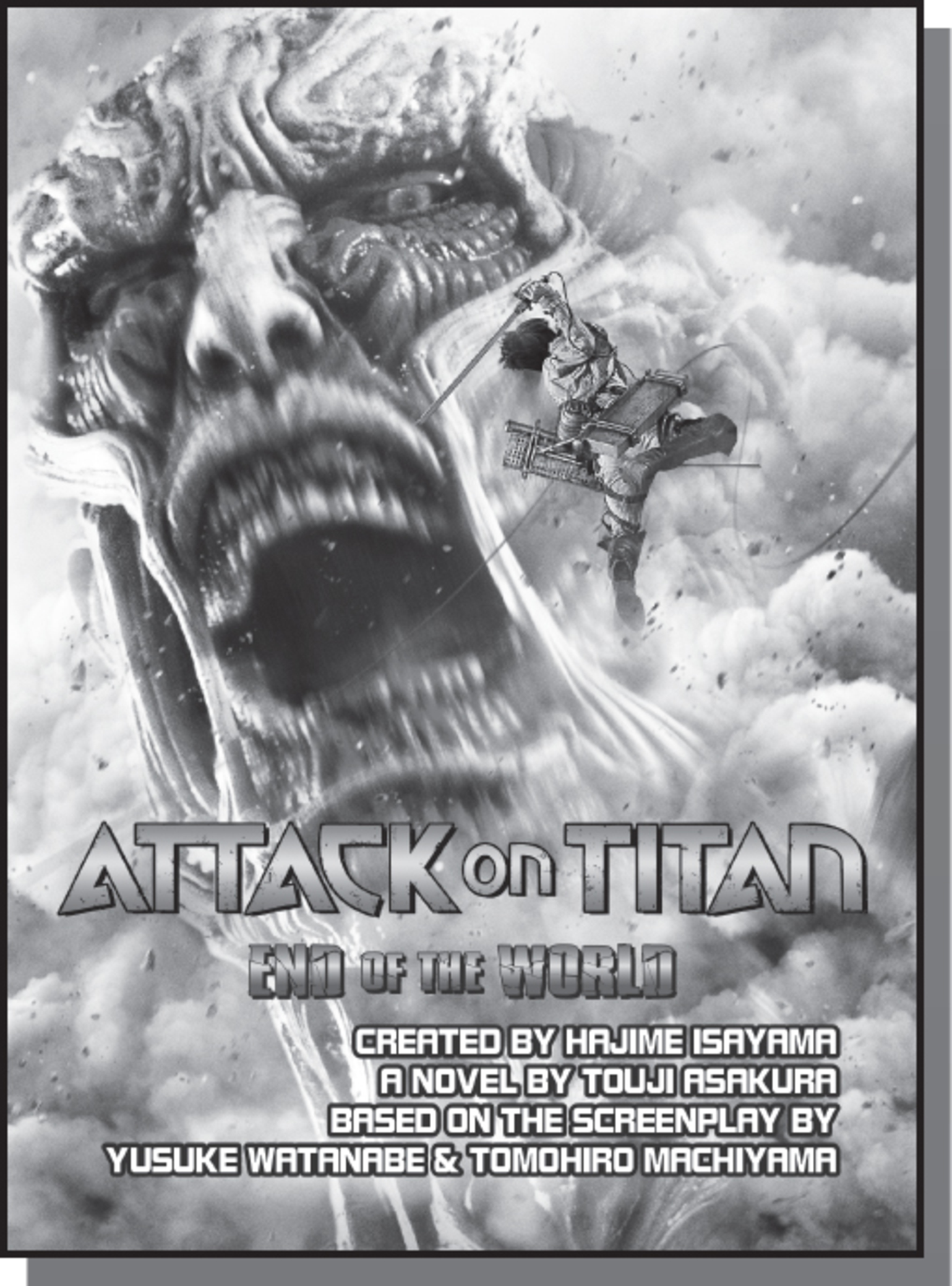
ATTACK ON TITAN:
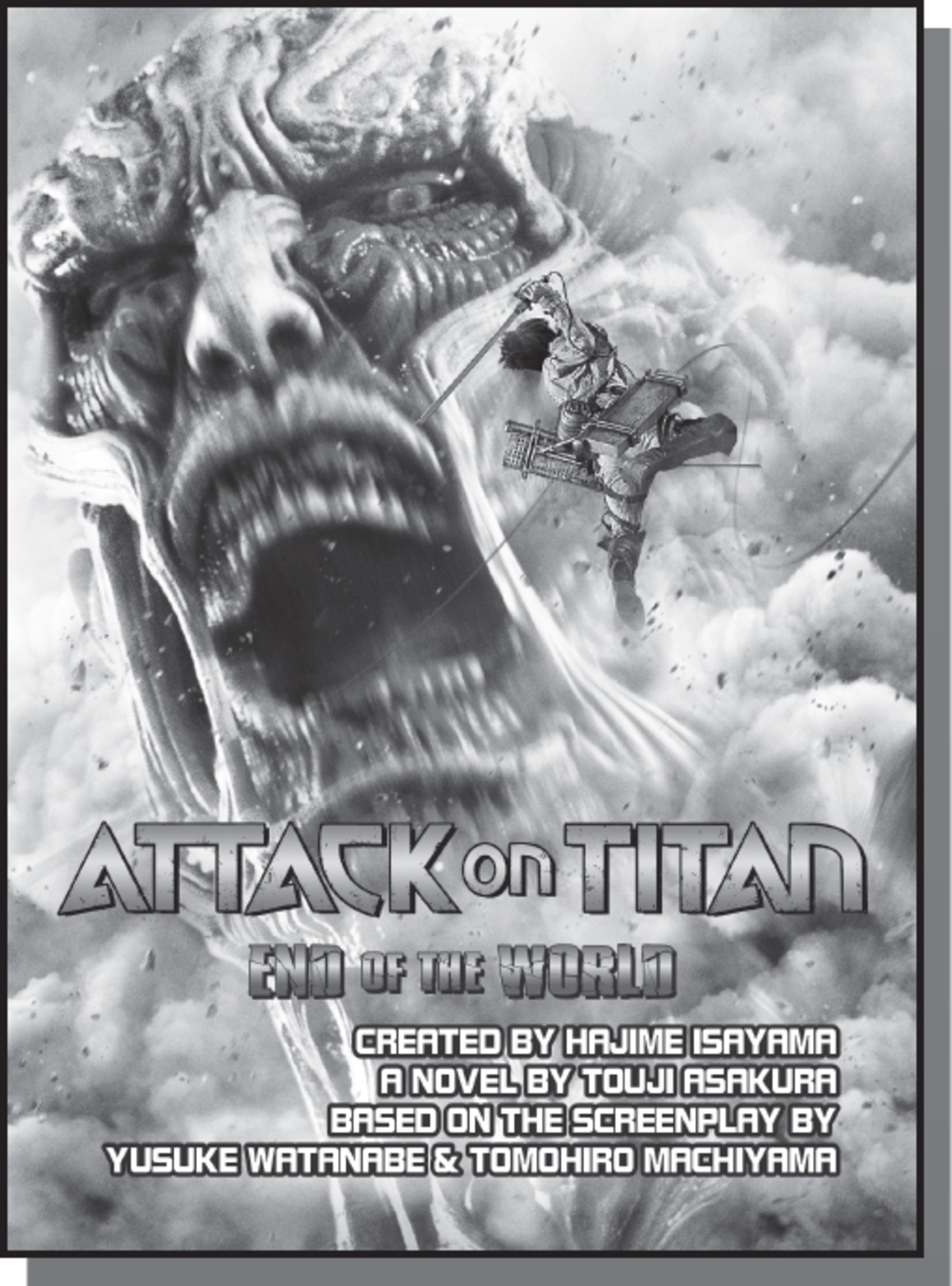
END OF THE WORLD
In this novelization of the theatrical adaptation, the series’ familiar setting, plot, and themes are reconfigured into a compact whole that is fully accessible to the uninitiated and strangely clarifying for fans.
LEARN MORE AT VERTICAL-INC.COM